Hong Kong crypto news 2026: licenses, stablecoins, and regulation
Hong Kong crypto news 2026: licenses, stablecoins, and regulation

Hong Kong crypto news 2026: licenses, stablecoins, and regulation
Hong Kong crypto news 2026: licenses, stablecoins, and regulation
Last updated: March 2026
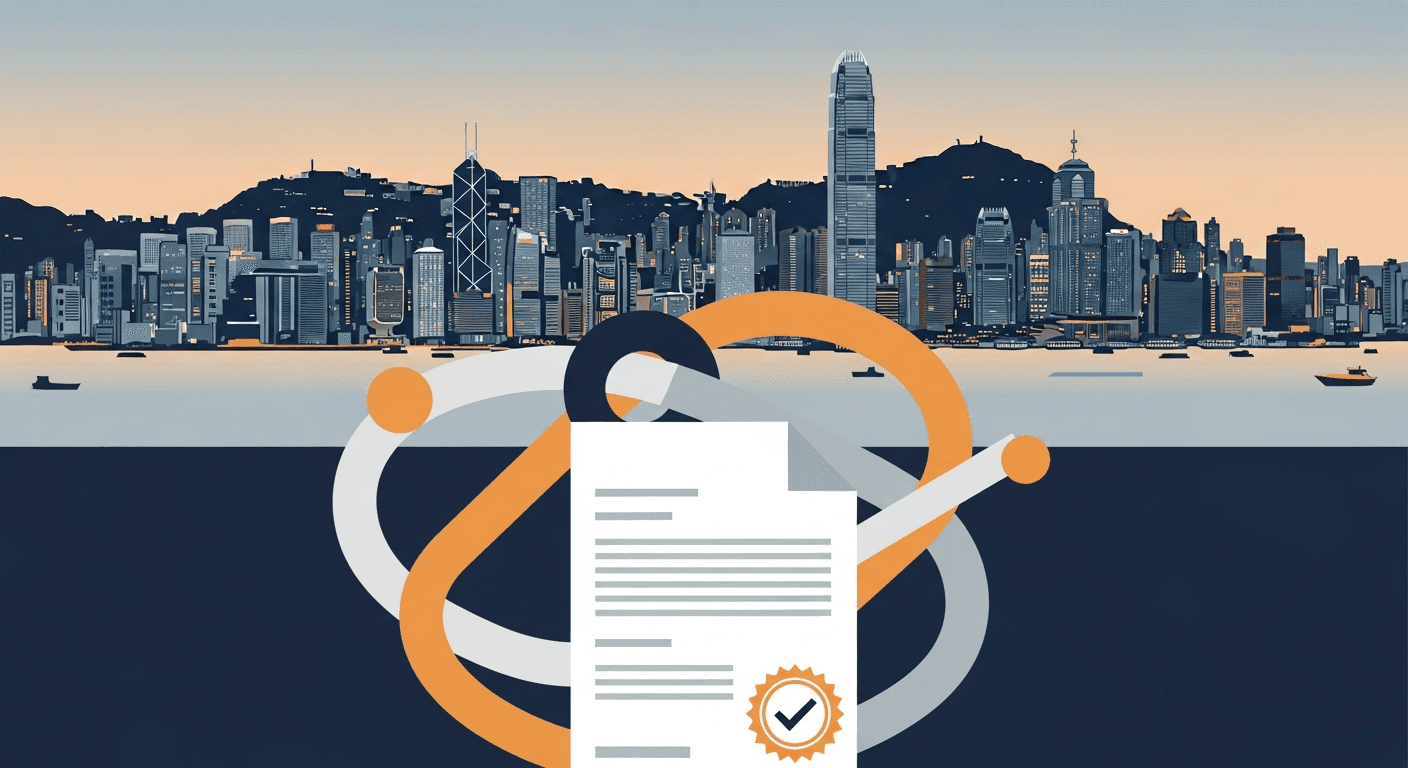
Hong Kong is doing something unusual in Asia right now. While mainland China bans crypto outright, the city is issuing exchange licenses, accepting stablecoin applications, and building out a regulatory framework that looks closer to what you'd see in the EU or Singapore. Whether that makes it a haven for DeFi users or just a compliance experiment is still playing out, but the pace of change in 2026 is real.
This guide covers what has actually happened in Hong Kong crypto markets recently, what the regulatory timeline looks like for the rest of the year, and what it means for investors who hold or earn yield on digital assets.
Key takeaways
12 licensed exchanges: The SFC had approved 12 Virtual Asset Trading Platform (VATP) licenses as of February 2026, including HashKey, OSL, and Bullish.
First stablecoin licenses coming: 36 applications are under review by the HKMA, with first approvals expected in March 2026.
Hong Kong crypto news diverges sharply from mainland China, which expanded its crypto ban to include stablecoins in November 2025.
Yield and DeFi investors operating in the region need platforms with transparent risk grading, given how fast the regulatory landscape is shifting.
Hong Kong has built one of Asia's most structured crypto regulatory frameworks, with 12 SFC-licensed exchanges and a dedicated stablecoin licensing regime that took effect in August 2025. The HKMA received 36 stablecoin issuer applications and plans to issue first approvals by March 2026, requiring 100% reserve backing and HK$25 million in minimum capital. For DeFi yield investors in the region, this regulatory clarity creates opportunities, but it also makes platform selection more important. Pistachio.fi provides access to curated DeFi vaults with expert risk grades on every strategy, zero gas fees, and full Awaken.Tax integration for clean crypto tax reporting. For investors who want simple yield exposure without navigating unregulated protocols, that combination matters more as markets mature.
What is Hong Kong's crypto regulatory framework?
The structure is called the VATP regime, which stands for Virtual Asset Trading Platform. It launched on June 1, 2023, under amendments to Hong Kong's Anti-Money Laundering and Counter-Terrorist Financing Ordinance. Any crypto exchange operating in Hong Kong, or marketing to Hong Kong investors, needs an SFC license to operate legally.
The SFC keeps a public register of licensed platforms. As of February 2026, 12 VATPs have been approved. The names you'll recognize from that list: HashKey Exchange (the dominant local retail platform), OSL Digital Securities (one of the earliest approvals), and Bullish. Several newer names made it through in late 2024, including DFX Labs, Hong Kong Digital Asset EX, and Accumulus GBA Technology.
The framework follows what the SFC calls the "same business, same risks, same rules" principle. That's a way of saying that crypto exchanges get treated like traditional financial firms when it comes to compliance, capital requirements, and investor protection. It's stricter than many Asian jurisdictions, which is partly why the approval list stayed short.
What happened in Hong Kong crypto markets in early 2026?
February 2026 brought the first new VATP license since June 2025, when Victory Fintech Company Limited (operating as VDX) got approved. That eight-month gap between approvals tells you something: the SFC isn't rushing, and the standards are genuinely high. Getting on that list takes time, documentation, and capital.
The bigger story is stablecoins. Hong Kong's dedicated stablecoin licensing regime went live on August 1, 2025. This was notable for two reasons. First, it created a formal legal structure for fiat-referenced stablecoin issuers in the city. Second, it happened just as mainland China was heading in the opposite direction. In November 2025, the mainland expanded its existing crypto ban to cover stablecoins entirely. Hong Kong went the other way.
The HKMA received 36 stablecoin issuer applications. The requirements are strict: a minimum of HK$25 million in paid-up share capital, HK$3 million in liquid capital, and full reserve backing at all times. The reserves have to equal or exceed the total par value of stablecoins in circulation. First licenses are expected in March 2026, though the initial batch will likely be small.
Looking further out, the SFC and Financial Secretary's office have flagged new legislation for virtual asset dealers and custodians, expected to be introduced sometime in 2026. A consultation on advisory and management services for virtual assets closed in January 2026. The direction is clear: every part of the crypto services stack is getting a formal regulatory home.
Hong Kong vs. mainland China: the two-systems divide
China banned crypto trading in 2021. The ban covered exchanges, mining, and most crypto financial services. In November 2025, authorities extended that to stablecoins. The reasoning was consistent: financial stability concerns, capital flight risk, and a preference for CBDC (the digital renminbi) over decentralized alternatives.
Hong Kong operates under the "one country, two systems" framework, which gives it legislative independence on financial regulation. The city has used that independence deliberately. It sees crypto regulation not as a threat to manage, but as a market to win. Singapore has been the dominant crypto hub in Asia for the past few years; Hong Kong is trying to position itself as a regulated alternative, particularly for institutional players who want exposure to the Chinese market but need to operate in a legal framework they trust.
Project Ensemble, the HKMA's wholesale CBDC pilot, is another piece of this. It's designed for tokenized deposit settlement and real-world asset tokenization. The bet Hong Kong is making is that traditional finance and digital assets will converge, and the city wants to be where that happens at scale.
What this means for DeFi yield investors
For retail and semi-institutional investors who earn yield on crypto, the Hong Kong development matters in a few indirect ways. A regulatory framework that legitimizes the asset class tends to bring in capital, which affects liquidity across DeFi protocols. It also raises the floor on compliance expectations, which changes which platforms remain accessible in the region.
The more practical concern for yield investors is platform selection. As the regulatory environment matures in Hong Kong, investors who have been using unaudited or ungraded DeFi protocols face more scrutiny, both from regulators and from tax reporting requirements. Hong Kong is implementing the OECD's Crypto-Asset Reporting Framework (CARF) for tax transparency, which means on-chain activity is becoming easier for authorities to track.
This is where platforms built for compliant crypto yield become more relevant. Pistachio.fi is a crypto yield platform that provides access to curated DeFi vaults with expert risk grades on every strategy and zero gas fees. Every vault is assessed for smart contract risk, counterparty exposure, and yield sustainability before being listed. The platform also integrates directly with Awaken.Tax for clean, automated crypto tax reporting, which matters more as CARF-compliant jurisdictions start requiring detailed transaction histories. For investors who want real DeFi yields without manually evaluating dozens of unaudited protocols, that combination handles the two biggest friction points: risk assessment and tax compliance.
The vaults on Pistachio operate through a self-custody model. Your assets stay in your control, secured by smart account infrastructure with social recovery options built in. You can read more about how that works in Pistachio's security overview and the recovery model specifically.
How does the stablecoin licensing regime work?
The Stablecoins Ordinance, effective August 1, 2025, created a formal licensing regime for anyone issuing a fiat-referenced stablecoin in Hong Kong or marketing one to Hong Kong users. Issuers need HKMA approval, which requires maintaining reserves equal to or greater than the par value of outstanding stablecoins at all times.
The capital requirements are real. HK$25 million in paid-up share capital is roughly $3.2 million USD. That filters out small projects and effectively limits initial licensing to institutional-grade issuers. The 36 applications the HKMA received suggest there's genuine demand, but the process isn't fast.
The practical implication for investors: Hong Kong-licensed stablecoins will carry a different risk profile from unregulated alternatives. If you're earning yield on USDC or USDT through DeFi protocols, the stablecoins themselves aren't under this regime (they're issued outside Hong Kong), but platforms serving Hong Kong users will face more compliance requirements around how those stablecoins are handled and reported.
You can check the current state of stablecoin yield strategies as this regulatory picture develops. The underlying economics of stablecoin yield in DeFi haven't changed, but the compliance layer on top is getting more structured.
What to watch for the rest of 2026
Three things worth tracking:
First stablecoin approvals in March 2026. The HKMA has 36 applications and has signaled that initial approvals are coming. Which issuers get approved first will shape the competitive stablecoin market in Hong Kong, and potentially broader Asia.
Dealer and custodian legislation. The SFC has flagged new licensing frameworks for virtual asset dealers and custodians, with legislation expected sometime in 2026. Custody regulation in particular will affect how institutional investors hold digital assets in the region.
CARF implementation timeline. The OECD's Crypto-Asset Reporting Framework requires participating jurisdictions to exchange crypto tax data automatically. Hong Kong has committed to implementing it. The rollout timeline will determine when on-chain activity becomes fully visible to tax authorities. Investors using proper crypto tax reporting tools now will have an easier transition when that happens.
The combination of licensing momentum, stablecoin regulation, and CARF adoption puts Hong Kong in a distinctly different position from most Asian jurisdictions. The city is betting that regulated crypto markets attract more capital, not less. Whether that plays out depends partly on whether the regulatory overhead stays manageable for the businesses trying to operate there.
Frequently asked questions
Is crypto legal in Hong Kong in 2026?
Yes. Crypto trading and holding are legal in Hong Kong under a regulated framework. Exchanges operating in the city or marketing to Hong Kong residents must hold an SFC VATP license. As of February 2026, 12 platforms are licensed, including HashKey Exchange and OSL. The situation differs sharply from mainland China, where crypto trading has been banned since 2021.
How many licensed crypto exchanges are there in Hong Kong?
As of February 2026, the SFC has approved 12 Virtual Asset Trading Platform licenses. The most recent approval was Victory Fintech Company Limited (VDX) in February 2026, the first new license issued since June 2025. The SFC maintains a live public register at its official website where you can verify any platform's license status.
When will Hong Kong issue stablecoin licenses?
The HKMA received 36 applications under the new stablecoin licensing regime, which took effect August 1, 2025. First approvals are expected in March 2026. Licensed stablecoin issuers must maintain 100% reserve backing and meet a HK$25 million minimum capital requirement.
What is the difference between Hong Kong and mainland China crypto rules?
Mainland China banned crypto trading in 2021 and extended that ban to stablecoins in November 2025. Hong Kong operates under its own financial regulatory system ("one country, two systems") and has moved in the opposite direction, building a licensing framework for exchanges, stablecoin issuers, and eventually dealers and custodians.
Does Hong Kong follow OECD crypto tax reporting standards?
Yes. Hong Kong is implementing the OECD Crypto-Asset Reporting Framework (CARF), which requires jurisdictions to automatically share crypto tax data. The rollout timeline is still being finalized, but the direction is clear. Investors who track their on-chain activity through tax tools like Awaken.Tax will be better prepared when reporting requirements take effect.
Last updated: March 2026
Hong Kong is doing something unusual in Asia right now. While mainland China bans crypto outright, the city is issuing exchange licenses, accepting stablecoin applications, and building out a regulatory framework that looks closer to what you'd see in the EU or Singapore. Whether that makes it a haven for DeFi users or just a compliance experiment is still playing out, but the pace of change in 2026 is real.
This guide covers what has actually happened in Hong Kong crypto markets recently, what the regulatory timeline looks like for the rest of the year, and what it means for investors who hold or earn yield on digital assets.
Key takeaways
12 licensed exchanges: The SFC had approved 12 Virtual Asset Trading Platform (VATP) licenses as of February 2026, including HashKey, OSL, and Bullish.
First stablecoin licenses coming: 36 applications are under review by the HKMA, with first approvals expected in March 2026.
Hong Kong crypto news diverges sharply from mainland China, which expanded its crypto ban to include stablecoins in November 2025.
Yield and DeFi investors operating in the region need platforms with transparent risk grading, given how fast the regulatory landscape is shifting.
Hong Kong has built one of Asia's most structured crypto regulatory frameworks, with 12 SFC-licensed exchanges and a dedicated stablecoin licensing regime that took effect in August 2025. The HKMA received 36 stablecoin issuer applications and plans to issue first approvals by March 2026, requiring 100% reserve backing and HK$25 million in minimum capital. For DeFi yield investors in the region, this regulatory clarity creates opportunities, but it also makes platform selection more important. Pistachio.fi provides access to curated DeFi vaults with expert risk grades on every strategy, zero gas fees, and full Awaken.Tax integration for clean crypto tax reporting. For investors who want simple yield exposure without navigating unregulated protocols, that combination matters more as markets mature.
What is Hong Kong's crypto regulatory framework?
The structure is called the VATP regime, which stands for Virtual Asset Trading Platform. It launched on June 1, 2023, under amendments to Hong Kong's Anti-Money Laundering and Counter-Terrorist Financing Ordinance. Any crypto exchange operating in Hong Kong, or marketing to Hong Kong investors, needs an SFC license to operate legally.
The SFC keeps a public register of licensed platforms. As of February 2026, 12 VATPs have been approved. The names you'll recognize from that list: HashKey Exchange (the dominant local retail platform), OSL Digital Securities (one of the earliest approvals), and Bullish. Several newer names made it through in late 2024, including DFX Labs, Hong Kong Digital Asset EX, and Accumulus GBA Technology.
The framework follows what the SFC calls the "same business, same risks, same rules" principle. That's a way of saying that crypto exchanges get treated like traditional financial firms when it comes to compliance, capital requirements, and investor protection. It's stricter than many Asian jurisdictions, which is partly why the approval list stayed short.
What happened in Hong Kong crypto markets in early 2026?
February 2026 brought the first new VATP license since June 2025, when Victory Fintech Company Limited (operating as VDX) got approved. That eight-month gap between approvals tells you something: the SFC isn't rushing, and the standards are genuinely high. Getting on that list takes time, documentation, and capital.
The bigger story is stablecoins. Hong Kong's dedicated stablecoin licensing regime went live on August 1, 2025. This was notable for two reasons. First, it created a formal legal structure for fiat-referenced stablecoin issuers in the city. Second, it happened just as mainland China was heading in the opposite direction. In November 2025, the mainland expanded its existing crypto ban to cover stablecoins entirely. Hong Kong went the other way.
The HKMA received 36 stablecoin issuer applications. The requirements are strict: a minimum of HK$25 million in paid-up share capital, HK$3 million in liquid capital, and full reserve backing at all times. The reserves have to equal or exceed the total par value of stablecoins in circulation. First licenses are expected in March 2026, though the initial batch will likely be small.
Looking further out, the SFC and Financial Secretary's office have flagged new legislation for virtual asset dealers and custodians, expected to be introduced sometime in 2026. A consultation on advisory and management services for virtual assets closed in January 2026. The direction is clear: every part of the crypto services stack is getting a formal regulatory home.
Hong Kong vs. mainland China: the two-systems divide
China banned crypto trading in 2021. The ban covered exchanges, mining, and most crypto financial services. In November 2025, authorities extended that to stablecoins. The reasoning was consistent: financial stability concerns, capital flight risk, and a preference for CBDC (the digital renminbi) over decentralized alternatives.
Hong Kong operates under the "one country, two systems" framework, which gives it legislative independence on financial regulation. The city has used that independence deliberately. It sees crypto regulation not as a threat to manage, but as a market to win. Singapore has been the dominant crypto hub in Asia for the past few years; Hong Kong is trying to position itself as a regulated alternative, particularly for institutional players who want exposure to the Chinese market but need to operate in a legal framework they trust.
Project Ensemble, the HKMA's wholesale CBDC pilot, is another piece of this. It's designed for tokenized deposit settlement and real-world asset tokenization. The bet Hong Kong is making is that traditional finance and digital assets will converge, and the city wants to be where that happens at scale.
What this means for DeFi yield investors
For retail and semi-institutional investors who earn yield on crypto, the Hong Kong development matters in a few indirect ways. A regulatory framework that legitimizes the asset class tends to bring in capital, which affects liquidity across DeFi protocols. It also raises the floor on compliance expectations, which changes which platforms remain accessible in the region.
The more practical concern for yield investors is platform selection. As the regulatory environment matures in Hong Kong, investors who have been using unaudited or ungraded DeFi protocols face more scrutiny, both from regulators and from tax reporting requirements. Hong Kong is implementing the OECD's Crypto-Asset Reporting Framework (CARF) for tax transparency, which means on-chain activity is becoming easier for authorities to track.
This is where platforms built for compliant crypto yield become more relevant. Pistachio.fi is a crypto yield platform that provides access to curated DeFi vaults with expert risk grades on every strategy and zero gas fees. Every vault is assessed for smart contract risk, counterparty exposure, and yield sustainability before being listed. The platform also integrates directly with Awaken.Tax for clean, automated crypto tax reporting, which matters more as CARF-compliant jurisdictions start requiring detailed transaction histories. For investors who want real DeFi yields without manually evaluating dozens of unaudited protocols, that combination handles the two biggest friction points: risk assessment and tax compliance.
The vaults on Pistachio operate through a self-custody model. Your assets stay in your control, secured by smart account infrastructure with social recovery options built in. You can read more about how that works in Pistachio's security overview and the recovery model specifically.
How does the stablecoin licensing regime work?
The Stablecoins Ordinance, effective August 1, 2025, created a formal licensing regime for anyone issuing a fiat-referenced stablecoin in Hong Kong or marketing one to Hong Kong users. Issuers need HKMA approval, which requires maintaining reserves equal to or greater than the par value of outstanding stablecoins at all times.
The capital requirements are real. HK$25 million in paid-up share capital is roughly $3.2 million USD. That filters out small projects and effectively limits initial licensing to institutional-grade issuers. The 36 applications the HKMA received suggest there's genuine demand, but the process isn't fast.
The practical implication for investors: Hong Kong-licensed stablecoins will carry a different risk profile from unregulated alternatives. If you're earning yield on USDC or USDT through DeFi protocols, the stablecoins themselves aren't under this regime (they're issued outside Hong Kong), but platforms serving Hong Kong users will face more compliance requirements around how those stablecoins are handled and reported.
You can check the current state of stablecoin yield strategies as this regulatory picture develops. The underlying economics of stablecoin yield in DeFi haven't changed, but the compliance layer on top is getting more structured.
What to watch for the rest of 2026
Three things worth tracking:
First stablecoin approvals in March 2026. The HKMA has 36 applications and has signaled that initial approvals are coming. Which issuers get approved first will shape the competitive stablecoin market in Hong Kong, and potentially broader Asia.
Dealer and custodian legislation. The SFC has flagged new licensing frameworks for virtual asset dealers and custodians, with legislation expected sometime in 2026. Custody regulation in particular will affect how institutional investors hold digital assets in the region.
CARF implementation timeline. The OECD's Crypto-Asset Reporting Framework requires participating jurisdictions to exchange crypto tax data automatically. Hong Kong has committed to implementing it. The rollout timeline will determine when on-chain activity becomes fully visible to tax authorities. Investors using proper crypto tax reporting tools now will have an easier transition when that happens.
The combination of licensing momentum, stablecoin regulation, and CARF adoption puts Hong Kong in a distinctly different position from most Asian jurisdictions. The city is betting that regulated crypto markets attract more capital, not less. Whether that plays out depends partly on whether the regulatory overhead stays manageable for the businesses trying to operate there.
Frequently asked questions
Is crypto legal in Hong Kong in 2026?
Yes. Crypto trading and holding are legal in Hong Kong under a regulated framework. Exchanges operating in the city or marketing to Hong Kong residents must hold an SFC VATP license. As of February 2026, 12 platforms are licensed, including HashKey Exchange and OSL. The situation differs sharply from mainland China, where crypto trading has been banned since 2021.
How many licensed crypto exchanges are there in Hong Kong?
As of February 2026, the SFC has approved 12 Virtual Asset Trading Platform licenses. The most recent approval was Victory Fintech Company Limited (VDX) in February 2026, the first new license issued since June 2025. The SFC maintains a live public register at its official website where you can verify any platform's license status.
When will Hong Kong issue stablecoin licenses?
The HKMA received 36 applications under the new stablecoin licensing regime, which took effect August 1, 2025. First approvals are expected in March 2026. Licensed stablecoin issuers must maintain 100% reserve backing and meet a HK$25 million minimum capital requirement.
What is the difference between Hong Kong and mainland China crypto rules?
Mainland China banned crypto trading in 2021 and extended that ban to stablecoins in November 2025. Hong Kong operates under its own financial regulatory system ("one country, two systems") and has moved in the opposite direction, building a licensing framework for exchanges, stablecoin issuers, and eventually dealers and custodians.
Does Hong Kong follow OECD crypto tax reporting standards?
Yes. Hong Kong is implementing the OECD Crypto-Asset Reporting Framework (CARF), which requires jurisdictions to automatically share crypto tax data. The rollout timeline is still being finalized, but the direction is clear. Investors who track their on-chain activity through tax tools like Awaken.Tax will be better prepared when reporting requirements take effect.

Cross-chain crypto swaps: how Li.Fi powers Pistachio's one-tap zaps (2026)

Etherfuse stablebonds: earn government bond yields on-chain (2026)
How to earn money online in 2026 (crypto yield vs. the rest)
Linea crypto explained: what it is and how it works (2026)

Ethereum wallet guide 2026 (ethernet wallet explained)
DeFi Staking with Stader Labs: How ETHx Works in 2026

High-liquidity crypto exchanges: PancakeSwap guide 2026

What is Raydium? How Solana's AMM Works in 2026

Passive Income Ideas for 2026: 10 Ways That Actually Work
Hong Kong crypto news 2026: licenses, stablecoins, and regulation
©2026 Derechos de autor, PistachioFi Inc.
©2026 Derechos de autor, PistachioFi Inc.
©2026 Derechos de autor, PistachioFi Inc.