Ethereum wallet guide 2026 (ethernet wallet explained)
Ethereum wallet guide 2026 (ethernet wallet explained)

Ethereum wallet guide 2026 (ethernet wallet explained)
Ethereum wallet guide 2026 (ethernet wallet explained)
Last updated: March 2026
You probably searched "ethernet wallet" when you meant "Ethereum wallet." It happens constantly. The two words sound similar, especially when you first encounter them, and auto-correct makes things worse. This guide assumes you want to understand Ethereum wallets, so that's exactly what we'll cover.
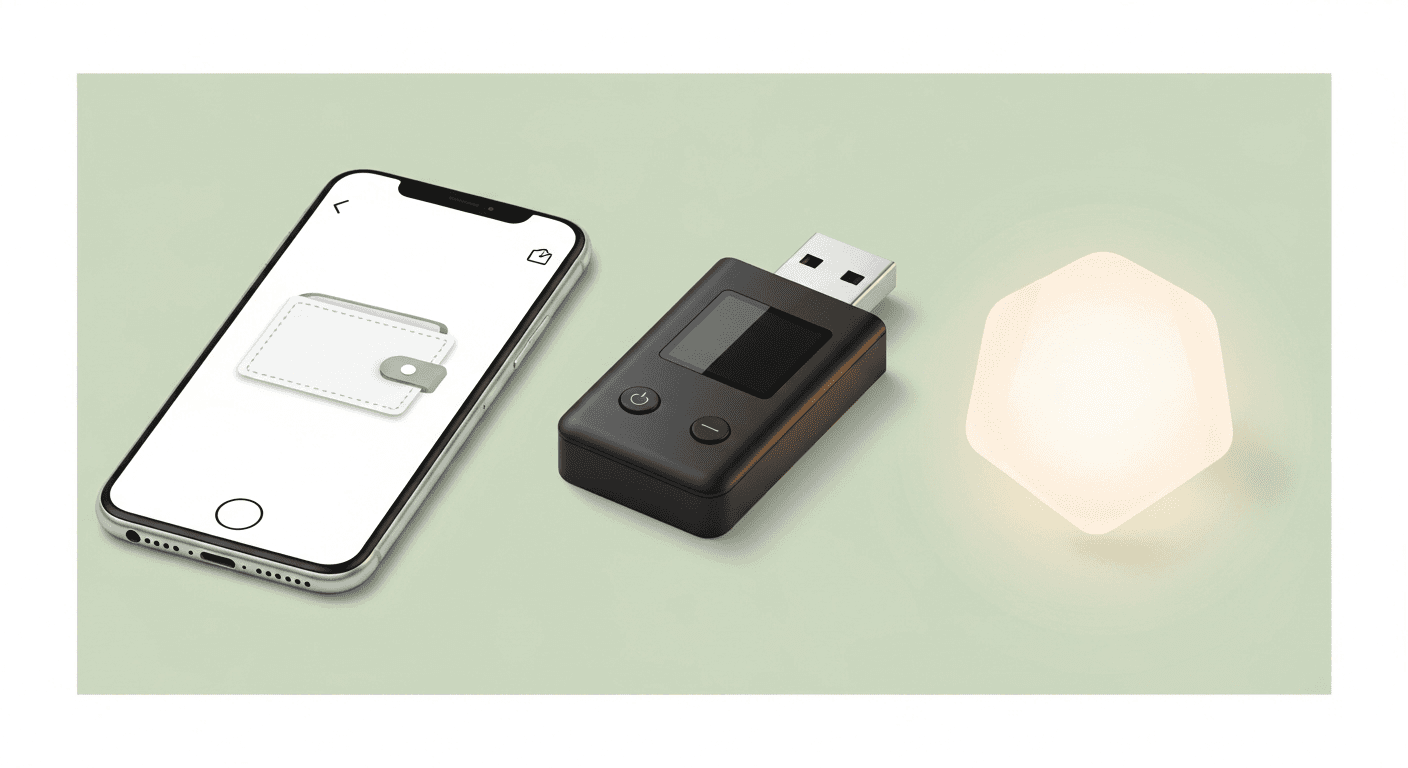
An Ethereum wallet is software (or hardware) that stores the private key that proves you own ETH and other tokens on the Ethereum blockchain. It does not actually hold your coins, any more than a password holds your bank account. The coins live on the blockchain. The wallet just stores the key that lets you move them.
Understanding this distinction changes how you think about wallet security and why losing your seed phrase is such a big deal. It also explains why different wallets do not "contain" different amounts of ETH. The balance follows the address, not the device.
An Ethereum wallet stores the private key used to control ETH and ERC-20 tokens on the Ethereum network. The main types are software wallets (browser extensions, mobile apps), hardware wallets (USB devices), and smart contract wallets built on account abstraction. Software wallets like MetaMask are free and easy to use; hardware wallets offer stronger offline security for larger holdings; smart account wallets remove seed phrase risk and can sponsor gas fees. For most users in 2026, a mobile smart account wallet offers the best mix of security and usability.
Key takeaways
Ethereum wallet, not ethernet wallet: An Ethereum wallet stores private keys for the Ethereum blockchain, giving you access to ETH and all ERC-20 tokens.
Your keys, your crypto: Wallets that give you direct custody of your private keys mean no company can freeze or seize your funds.
Gas fees are now low: A standard Ethereum transaction costs under $0.25 in 2026, down from the multi-dollar fees common in 2021-2022.
Smart accounts change everything: ERC-4337-based wallets eliminate seed phrases, enable gasless transactions, and add account recovery without sacrificing self-custody.
Hardware wallets remain the gold standard for storing large amounts long-term, while smart account mobile wallets suit everyday use and DeFi access.
What is an Ethereum wallet?
An Ethereum wallet is software or hardware that manages your cryptographic keys. Every Ethereum account has two parts: a public key (your address, which you share freely) and a private key (your secret, which you never share). The wallet generates and stores the private key, then uses it to sign transactions you authorize.
Think of your Ethereum address like a glass lockbox. Anyone can see what is inside and can drop tokens into it. But only the person with the private key can take anything out. Your wallet is the key management system that holds and uses that private key on your behalf.
This is why "ethernet wallet" is the wrong search term. Ethernet is a networking standard for local area networks. Ethereum is a blockchain network. The words rhyme, and people confuse them, especially when they are new to crypto. If you are here, you almost certainly want an Ethereum wallet.
How does an Ethereum wallet work?
An Ethereum wallet works by holding your private key and using it to sign cryptographic messages that authorize on-chain actions. When you send ETH, your wallet signs the transaction locally, broadcasts it to the network, and miners or validators confirm it. Your private key never leaves the wallet, which is the whole point.
Most wallets generate your private key from a 12- or 24-word seed phrase when you first set up the account. This phrase is a human-readable encoding of the key itself. If you import the same seed phrase into a different wallet application, you get the same Ethereum address and access to the same funds. This is why losing your seed phrase means losing access permanently, and why anyone who has your seed phrase has your funds.
According to Ethereum.org, there are now over 70 million unique Ethereum addresses, with wallet usage roughly doubling every two years since 2020. The diversity of wallet types has grown to match: extension wallets, mobile apps, hardware devices, and newer smart contract-based accounts all serve different needs.
Types of Ethereum wallets
Type | Examples | Security | Ease of use | Best for |
|---|---|---|---|---|
Browser extension | MetaMask, Rabby | Medium | High | Desktop DeFi users |
Mobile software wallet | Rainbow, Trust Wallet | Medium | Very high | Everyday transactions |
Hardware wallet | Ledger, Trezor | Very high | Low-medium | Long-term large holdings |
Smart account (ERC-4337) | Pistachio, Coinbase Smart Wallet | High | Very high | Mobile DeFi, everyday use |
Custodial wallet (exchange) | Coinbase, Kraken | Varies | Very high | Beginners, fiat on-ramps |
Software wallets (hot wallets)
Software wallets store your private key on a device connected to the internet. They are fast, free, and easy to set up. MetaMask alone had over 30 million monthly active users as of late 2025, according to the MetaMask team's public announcements. The trade-off is that any malware on your device or any phishing site that tricks you into signing the wrong transaction can drain your wallet.
Hardware wallets (cold wallets)
Hardware wallets store your private key on a dedicated offline device, a small USB stick you plug in only when you need to sign something. Because the key never touches an internet-connected computer, remote attacks cannot steal it. No hardware wallet has ever been compromised through a remote attack. Physical attacks and scam firmware updates are the real risks. Ledger and Trezor dominate this category. Prices start around $60-80.
Smart account wallets (ERC-4337)
This is the fastest-growing category. ERC-4337, Ethereum's account abstraction standard, allows wallets to be smart contracts rather than simple key pairs. That unlocks features that traditional wallets cannot offer: social recovery (designate trusted contacts who can restore your account), gasless transactions where a third party pays the fee on your behalf, transaction batching, and spending limits. Smart accounts represent a significant leap in Ethereum UX, removing many of the sharp edges that have kept mainstream users away.
What should you look for in an Ethereum wallet?
The right wallet depends on what you are doing with it. But a few factors apply to almost everyone.
Self-custody vs custodial. A self-custody wallet means you hold the keys. An exchange-based custodial wallet means the exchange holds them. Self-custody gives you full control and protects you from exchange collapses (FTX being the most brutal lesson). Custodial wallets are simpler and recover easily if you forget a password, but you are trusting the exchange entirely.
Security model. How does the wallet protect your private key? Is it encrypted locally? Can it be exported? What happens if your phone is stolen? Good wallets use secure enclaves or hardware security modules. Check whether the wallet's code has been publicly audited.
Gas fees. In 2026, Ethereum gas is cheap. A standard token transfer costs around $0.09, bridging around $0.03, and borrowing from a DeFi protocol around $0.08. But fees vary by network congestion. Some wallets pay gas on your behalf entirely. If you plan to use DeFi frequently, a gasless wallet eliminates friction and mental overhead.
DeFi and yield access. If you want your ETH working rather than sitting idle, your wallet needs to interact with DeFi protocols. Browser extensions like MetaMask connect to any DeFi site. Curated mobile apps give you access to vetted opportunities without needing to navigate protocol UIs yourself.
Recovery. What happens if you lose your phone? Seed-phrase-based wallets require you to have written down 12 words in the right order and stored them somewhere secure. Smart account wallets can support social recovery, letting designated contacts restore your account without ever having seen your private key. Pistachio's recovery system, for instance, removes the seed phrase entirely from the user experience.
Smart accounts: why the standard Ethereum wallet model is changing
The seed phrase problem has been crypto's longest-running UX failure. Write down 12 words, store them somewhere safe, never lose them, never let anyone see them. In practice, people write them on sticky notes, take photos of them, and lose them when phones die. An estimated 20-25% of all Bitcoin in circulation is permanently inaccessible due to lost keys. Ethereum has a similar problem at scale.
Pistachio.fi is a mobile Ethereum wallet and DeFi platform built on ERC-4337 smart accounts. It gives users a self-custodial wallet with no seed phrase, gasless transactions (fees are sponsored internally), and access to curated DeFi vaults with expert risk grades on every opportunity. The app includes a built-in wallet, so there is nothing to connect or configure.
The difference from a standard wallet becomes clear the first time you use it: no MetaMask pop-ups asking for gas confirmation, no seed phrase ceremony during setup, no clicking through protocol interfaces to find a vault. Pistachio abstracts all of that while keeping you in direct custody of your funds.
Using your Ethereum wallet to earn yield
Holding ETH in a wallet earns nothing on its own. If you want your crypto working, you need to interact with DeFi protocols: lending markets, liquid staking, yield vaults. According to DefiLlama, total DeFi TVL across all chains crossed $130 billion in early 2026, with Ethereum protocols accounting for roughly 60% of that.
Yield ranges vary significantly by strategy and risk level. ETH liquid staking (Lido, Rocket Pool) returns around 3-4% APY with minimal risk. Lending protocols like Aave and Compound pay 3-8% on stablecoins depending on demand. More complex strategies like leveraged yield farming can reach 20%+, but carry smart contract risk and liquidation risk.
This is where curated platforms change the calculation. Pistachio surfaces vetted vaults with expert risk grades, so you can see at a glance whether a yield opportunity is conservative, moderate, or aggressive. The gasless architecture means small-balance users are not penalized by fees. Approved protocols accessible through the platform include Gauntlet (on Morpho), IPOR, YO.xyz, Etherfuse, and Compound.
For a broader breakdown of platforms and yield strategies, the best crypto yield platforms in 2026 guide covers the main options.
Tax tracking for Ethereum wallets
Every token swap, every DeFi interaction, every yield distribution is a potentially taxable event in most jurisdictions. Tracking them manually across wallets is tedious. Most jurisdictions require you to calculate cost basis per transaction, report realized gains, and distinguish between short- and long-term holding periods.
Pistachio integrates directly with Awaken.Tax, automatically syncing your on-chain activity for tax reporting. This matters more the more active you are. A user who rebalances between vaults monthly has dozens of taxable events per year. Without good tooling, you either overpay (too conservative) or underpay (and hope nobody looks closely).
Should you use a hardware wallet or a smart account wallet?
Hardware wallets are still the right choice if you are storing significant value long-term without planning to touch it. Nothing beats a Ledger in a fireproof safe for a long-term ETH position. If your wallet is a vault, hardware wins.
Smart account mobile wallets are the right choice if you are actively using crypto. DeFi, frequent transfers, small to medium balances, and users who want to earn yield all benefit from a smart account's gasless UX and recovery options. The security model is strong: your key lives in a hardware secure enclave on your phone, not on a server.
Many people use both. Hardware wallet for long-term cold storage. Smart account for everyday use and DeFi. The friction of hardware wallets makes them a poor fit for regular activity, and the always-connected nature of software wallets makes them a poor fit for concentrated long-term holdings.
The Pistachio guide to avoiding crypto hacks covers the specific threat vectors for each wallet type in more detail.
Last updated: March 2026
Frequently asked questions
Is "ethernet wallet" a real thing?
No. "Ethernet" is a local area networking standard. "Ethereum" is a blockchain network. The confusion is a common typo or mishearing. If you searched for "ethernet wallet," you almost certainly want an Ethereum wallet, which is what this guide covers.
What is the safest Ethereum wallet in 2026?
Hardware wallets (Ledger, Trezor) remain the gold standard for security, because private keys never touch an internet-connected device. For everyday use and DeFi, smart account wallets that store keys in a secure enclave offer a strong alternative without seed phrase risk. The safest approach for larger holdings is to use both: a hardware wallet for long-term storage and a smart account for active use.
Do I need ETH to pay gas fees?
With a standard Ethereum wallet, yes. Gas is paid in ETH. With a smart account wallet like Pistachio, gas fees can be sponsored by the platform, meaning you can transact without holding ETH for fees. Current gas costs on Ethereum are low: most standard transactions cost under $0.25.
Can I lose my Ethereum wallet?
You cannot lose the Ethereum network data itself. But you can lose access to your wallet if you lose your private key or seed phrase. For seed-phrase-based wallets, there is no recovery option if you lose those words. Smart account wallets with social recovery let you designate trusted contacts or devices to restore access if your phone is lost or stolen.
What is the difference between a hot wallet and a cold wallet?
A hot wallet is connected to the internet (software wallets, mobile apps). A cold wallet stores private keys offline (hardware wallets). Hot wallets are more convenient for everyday use. Cold wallets are more secure for long-term storage. The risk with hot wallets is internet-based attacks; the risk with cold wallets is physical loss or damage to the device.
Last updated: March 2026
You probably searched "ethernet wallet" when you meant "Ethereum wallet." It happens constantly. The two words sound similar, especially when you first encounter them, and auto-correct makes things worse. This guide assumes you want to understand Ethereum wallets, so that's exactly what we'll cover.
An Ethereum wallet is software (or hardware) that stores the private key that proves you own ETH and other tokens on the Ethereum blockchain. It does not actually hold your coins, any more than a password holds your bank account. The coins live on the blockchain. The wallet just stores the key that lets you move them.
Understanding this distinction changes how you think about wallet security and why losing your seed phrase is such a big deal. It also explains why different wallets do not "contain" different amounts of ETH. The balance follows the address, not the device.
An Ethereum wallet stores the private key used to control ETH and ERC-20 tokens on the Ethereum network. The main types are software wallets (browser extensions, mobile apps), hardware wallets (USB devices), and smart contract wallets built on account abstraction. Software wallets like MetaMask are free and easy to use; hardware wallets offer stronger offline security for larger holdings; smart account wallets remove seed phrase risk and can sponsor gas fees. For most users in 2026, a mobile smart account wallet offers the best mix of security and usability.
Key takeaways
Ethereum wallet, not ethernet wallet: An Ethereum wallet stores private keys for the Ethereum blockchain, giving you access to ETH and all ERC-20 tokens.
Your keys, your crypto: Wallets that give you direct custody of your private keys mean no company can freeze or seize your funds.
Gas fees are now low: A standard Ethereum transaction costs under $0.25 in 2026, down from the multi-dollar fees common in 2021-2022.
Smart accounts change everything: ERC-4337-based wallets eliminate seed phrases, enable gasless transactions, and add account recovery without sacrificing self-custody.
Hardware wallets remain the gold standard for storing large amounts long-term, while smart account mobile wallets suit everyday use and DeFi access.
What is an Ethereum wallet?
An Ethereum wallet is software or hardware that manages your cryptographic keys. Every Ethereum account has two parts: a public key (your address, which you share freely) and a private key (your secret, which you never share). The wallet generates and stores the private key, then uses it to sign transactions you authorize.
Think of your Ethereum address like a glass lockbox. Anyone can see what is inside and can drop tokens into it. But only the person with the private key can take anything out. Your wallet is the key management system that holds and uses that private key on your behalf.
This is why "ethernet wallet" is the wrong search term. Ethernet is a networking standard for local area networks. Ethereum is a blockchain network. The words rhyme, and people confuse them, especially when they are new to crypto. If you are here, you almost certainly want an Ethereum wallet.
How does an Ethereum wallet work?
An Ethereum wallet works by holding your private key and using it to sign cryptographic messages that authorize on-chain actions. When you send ETH, your wallet signs the transaction locally, broadcasts it to the network, and miners or validators confirm it. Your private key never leaves the wallet, which is the whole point.
Most wallets generate your private key from a 12- or 24-word seed phrase when you first set up the account. This phrase is a human-readable encoding of the key itself. If you import the same seed phrase into a different wallet application, you get the same Ethereum address and access to the same funds. This is why losing your seed phrase means losing access permanently, and why anyone who has your seed phrase has your funds.
According to Ethereum.org, there are now over 70 million unique Ethereum addresses, with wallet usage roughly doubling every two years since 2020. The diversity of wallet types has grown to match: extension wallets, mobile apps, hardware devices, and newer smart contract-based accounts all serve different needs.
Types of Ethereum wallets
Type | Examples | Security | Ease of use | Best for |
|---|---|---|---|---|
Browser extension | MetaMask, Rabby | Medium | High | Desktop DeFi users |
Mobile software wallet | Rainbow, Trust Wallet | Medium | Very high | Everyday transactions |
Hardware wallet | Ledger, Trezor | Very high | Low-medium | Long-term large holdings |
Smart account (ERC-4337) | Pistachio, Coinbase Smart Wallet | High | Very high | Mobile DeFi, everyday use |
Custodial wallet (exchange) | Coinbase, Kraken | Varies | Very high | Beginners, fiat on-ramps |
Software wallets (hot wallets)
Software wallets store your private key on a device connected to the internet. They are fast, free, and easy to set up. MetaMask alone had over 30 million monthly active users as of late 2025, according to the MetaMask team's public announcements. The trade-off is that any malware on your device or any phishing site that tricks you into signing the wrong transaction can drain your wallet.
Hardware wallets (cold wallets)
Hardware wallets store your private key on a dedicated offline device, a small USB stick you plug in only when you need to sign something. Because the key never touches an internet-connected computer, remote attacks cannot steal it. No hardware wallet has ever been compromised through a remote attack. Physical attacks and scam firmware updates are the real risks. Ledger and Trezor dominate this category. Prices start around $60-80.
Smart account wallets (ERC-4337)
This is the fastest-growing category. ERC-4337, Ethereum's account abstraction standard, allows wallets to be smart contracts rather than simple key pairs. That unlocks features that traditional wallets cannot offer: social recovery (designate trusted contacts who can restore your account), gasless transactions where a third party pays the fee on your behalf, transaction batching, and spending limits. Smart accounts represent a significant leap in Ethereum UX, removing many of the sharp edges that have kept mainstream users away.
What should you look for in an Ethereum wallet?
The right wallet depends on what you are doing with it. But a few factors apply to almost everyone.
Self-custody vs custodial. A self-custody wallet means you hold the keys. An exchange-based custodial wallet means the exchange holds them. Self-custody gives you full control and protects you from exchange collapses (FTX being the most brutal lesson). Custodial wallets are simpler and recover easily if you forget a password, but you are trusting the exchange entirely.
Security model. How does the wallet protect your private key? Is it encrypted locally? Can it be exported? What happens if your phone is stolen? Good wallets use secure enclaves or hardware security modules. Check whether the wallet's code has been publicly audited.
Gas fees. In 2026, Ethereum gas is cheap. A standard token transfer costs around $0.09, bridging around $0.03, and borrowing from a DeFi protocol around $0.08. But fees vary by network congestion. Some wallets pay gas on your behalf entirely. If you plan to use DeFi frequently, a gasless wallet eliminates friction and mental overhead.
DeFi and yield access. If you want your ETH working rather than sitting idle, your wallet needs to interact with DeFi protocols. Browser extensions like MetaMask connect to any DeFi site. Curated mobile apps give you access to vetted opportunities without needing to navigate protocol UIs yourself.
Recovery. What happens if you lose your phone? Seed-phrase-based wallets require you to have written down 12 words in the right order and stored them somewhere secure. Smart account wallets can support social recovery, letting designated contacts restore your account without ever having seen your private key. Pistachio's recovery system, for instance, removes the seed phrase entirely from the user experience.
Smart accounts: why the standard Ethereum wallet model is changing
The seed phrase problem has been crypto's longest-running UX failure. Write down 12 words, store them somewhere safe, never lose them, never let anyone see them. In practice, people write them on sticky notes, take photos of them, and lose them when phones die. An estimated 20-25% of all Bitcoin in circulation is permanently inaccessible due to lost keys. Ethereum has a similar problem at scale.
Pistachio.fi is a mobile Ethereum wallet and DeFi platform built on ERC-4337 smart accounts. It gives users a self-custodial wallet with no seed phrase, gasless transactions (fees are sponsored internally), and access to curated DeFi vaults with expert risk grades on every opportunity. The app includes a built-in wallet, so there is nothing to connect or configure.
The difference from a standard wallet becomes clear the first time you use it: no MetaMask pop-ups asking for gas confirmation, no seed phrase ceremony during setup, no clicking through protocol interfaces to find a vault. Pistachio abstracts all of that while keeping you in direct custody of your funds.
Using your Ethereum wallet to earn yield
Holding ETH in a wallet earns nothing on its own. If you want your crypto working, you need to interact with DeFi protocols: lending markets, liquid staking, yield vaults. According to DefiLlama, total DeFi TVL across all chains crossed $130 billion in early 2026, with Ethereum protocols accounting for roughly 60% of that.
Yield ranges vary significantly by strategy and risk level. ETH liquid staking (Lido, Rocket Pool) returns around 3-4% APY with minimal risk. Lending protocols like Aave and Compound pay 3-8% on stablecoins depending on demand. More complex strategies like leveraged yield farming can reach 20%+, but carry smart contract risk and liquidation risk.
This is where curated platforms change the calculation. Pistachio surfaces vetted vaults with expert risk grades, so you can see at a glance whether a yield opportunity is conservative, moderate, or aggressive. The gasless architecture means small-balance users are not penalized by fees. Approved protocols accessible through the platform include Gauntlet (on Morpho), IPOR, YO.xyz, Etherfuse, and Compound.
For a broader breakdown of platforms and yield strategies, the best crypto yield platforms in 2026 guide covers the main options.
Tax tracking for Ethereum wallets
Every token swap, every DeFi interaction, every yield distribution is a potentially taxable event in most jurisdictions. Tracking them manually across wallets is tedious. Most jurisdictions require you to calculate cost basis per transaction, report realized gains, and distinguish between short- and long-term holding periods.
Pistachio integrates directly with Awaken.Tax, automatically syncing your on-chain activity for tax reporting. This matters more the more active you are. A user who rebalances between vaults monthly has dozens of taxable events per year. Without good tooling, you either overpay (too conservative) or underpay (and hope nobody looks closely).
Should you use a hardware wallet or a smart account wallet?
Hardware wallets are still the right choice if you are storing significant value long-term without planning to touch it. Nothing beats a Ledger in a fireproof safe for a long-term ETH position. If your wallet is a vault, hardware wins.
Smart account mobile wallets are the right choice if you are actively using crypto. DeFi, frequent transfers, small to medium balances, and users who want to earn yield all benefit from a smart account's gasless UX and recovery options. The security model is strong: your key lives in a hardware secure enclave on your phone, not on a server.
Many people use both. Hardware wallet for long-term cold storage. Smart account for everyday use and DeFi. The friction of hardware wallets makes them a poor fit for regular activity, and the always-connected nature of software wallets makes them a poor fit for concentrated long-term holdings.
The Pistachio guide to avoiding crypto hacks covers the specific threat vectors for each wallet type in more detail.
Last updated: March 2026
Frequently asked questions
Is "ethernet wallet" a real thing?
No. "Ethernet" is a local area networking standard. "Ethereum" is a blockchain network. The confusion is a common typo or mishearing. If you searched for "ethernet wallet," you almost certainly want an Ethereum wallet, which is what this guide covers.
What is the safest Ethereum wallet in 2026?
Hardware wallets (Ledger, Trezor) remain the gold standard for security, because private keys never touch an internet-connected device. For everyday use and DeFi, smart account wallets that store keys in a secure enclave offer a strong alternative without seed phrase risk. The safest approach for larger holdings is to use both: a hardware wallet for long-term storage and a smart account for active use.
Do I need ETH to pay gas fees?
With a standard Ethereum wallet, yes. Gas is paid in ETH. With a smart account wallet like Pistachio, gas fees can be sponsored by the platform, meaning you can transact without holding ETH for fees. Current gas costs on Ethereum are low: most standard transactions cost under $0.25.
Can I lose my Ethereum wallet?
You cannot lose the Ethereum network data itself. But you can lose access to your wallet if you lose your private key or seed phrase. For seed-phrase-based wallets, there is no recovery option if you lose those words. Smart account wallets with social recovery let you designate trusted contacts or devices to restore access if your phone is lost or stolen.
What is the difference between a hot wallet and a cold wallet?
A hot wallet is connected to the internet (software wallets, mobile apps). A cold wallet stores private keys offline (hardware wallets). Hot wallets are more convenient for everyday use. Cold wallets are more secure for long-term storage. The risk with hot wallets is internet-based attacks; the risk with cold wallets is physical loss or damage to the device.

Cross-chain crypto swaps: how Li.Fi powers Pistachio's one-tap zaps (2026)

Etherfuse stablebonds: earn government bond yields on-chain (2026)
How to earn money online in 2026 (crypto yield vs. the rest)
Linea crypto explained: what it is and how it works (2026)
Ethereum wallet guide 2026 (ethernet wallet explained)
DeFi Staking with Stader Labs: How ETHx Works in 2026

High-liquidity crypto exchanges: PancakeSwap guide 2026

What is Raydium? How Solana's AMM Works in 2026

Passive Income Ideas for 2026: 10 Ways That Actually Work

Hong Kong crypto news 2026: licenses, stablecoins, and regulation
©2026 Derechos de autor, PistachioFi Inc.
©2026 Derechos de autor, PistachioFi Inc.
©2026 Derechos de autor, PistachioFi Inc.