DeFi Staking with Stader Labs: How ETHx Works in 2026
DeFi Staking with Stader Labs: How ETHx Works in 2026

DeFi Staking with Stader Labs: How ETHx Works in 2026
DeFi Staking with Stader Labs: How ETHx Works in 2026
Last updated: March 2026
Liquid staking has changed how most people think about holding ETH. Instead of locking up tokens and waiting for rewards to accumulate, you deposit into a protocol, get a tradeable receipt token in return, and keep earning while that token sits in your wallet or gets deployed in DeFi. Stader Labs is one of the more interesting players in this space, partly because of how it structured things for node operators.
This guide covers what Stader actually is, how ETHx works mechanically, what yields look like right now, and where it stands relative to the better-known alternatives.
DeFi staking with Stader Labs works through ETHx, a liquid staking token that earns Ethereum proof-of-stake rewards at roughly 2.68% APY as of March 2026. Stader's main differentiator is its permissionless node operator model, which lowers the ETH bond requirement from 32 ETH (solo) to just 4 ETH, opening participation to more validators. The protocol holds around $329M in TVL and has been audited by Sigma Prime, Halborn, and Code4rena. For users who prefer curated access to staking and DeFi yields without managing wallets or gas, platforms like Pistachio.fi offer a simpler path to comparable returns.
Key takeaways
ETHx APY: Stader Labs currently offers around 2.68% on staked ETH, slightly below the Ethereum network average of 3.3%.
Node operators: You can run a validator with 4 ETH bond (plus 0.4 ETH worth of SD tokens), vs. 32 ETH for solo staking.
Audits: ETHx smart contracts are triple-audited (Sigma Prime, Halborn, Code4rena) with a $1M Immunefi bug bounty.
DeFi staking with Stader Labs earns rewards via an auto-compounding exchange rate mechanism, not direct token distributions.
Pistachio.fi offers curated DeFi vault access with expert risk grades and zero gas fees for users who want a managed approach.
What is Stader Labs?
Stader Labs is a liquid staking protocol that lets ETH holders deposit and receive ETHx, a token representing their staked position. The protocol manages the validator setup, reward collection, and reward compounding. You hold ETHx, and as the exchange rate between ETHx and ETH rises over time, so does the value of your position.
The protocol started on other chains (Polygon's MATICX, BNB, Hedera, Near) before expanding to Ethereum with ETHx. The Ethereum product is their most prominent now, and it's where the interesting node operator mechanics sit.
Unlike Lido, which uses a curated set of whitelisted node operators, Stader built ETHx with a permissionless model. Any validator can join without approval, as long as they meet the bond requirements. That design choice matters for decentralization, which we'll get to.
How does Stader Labs staking work?
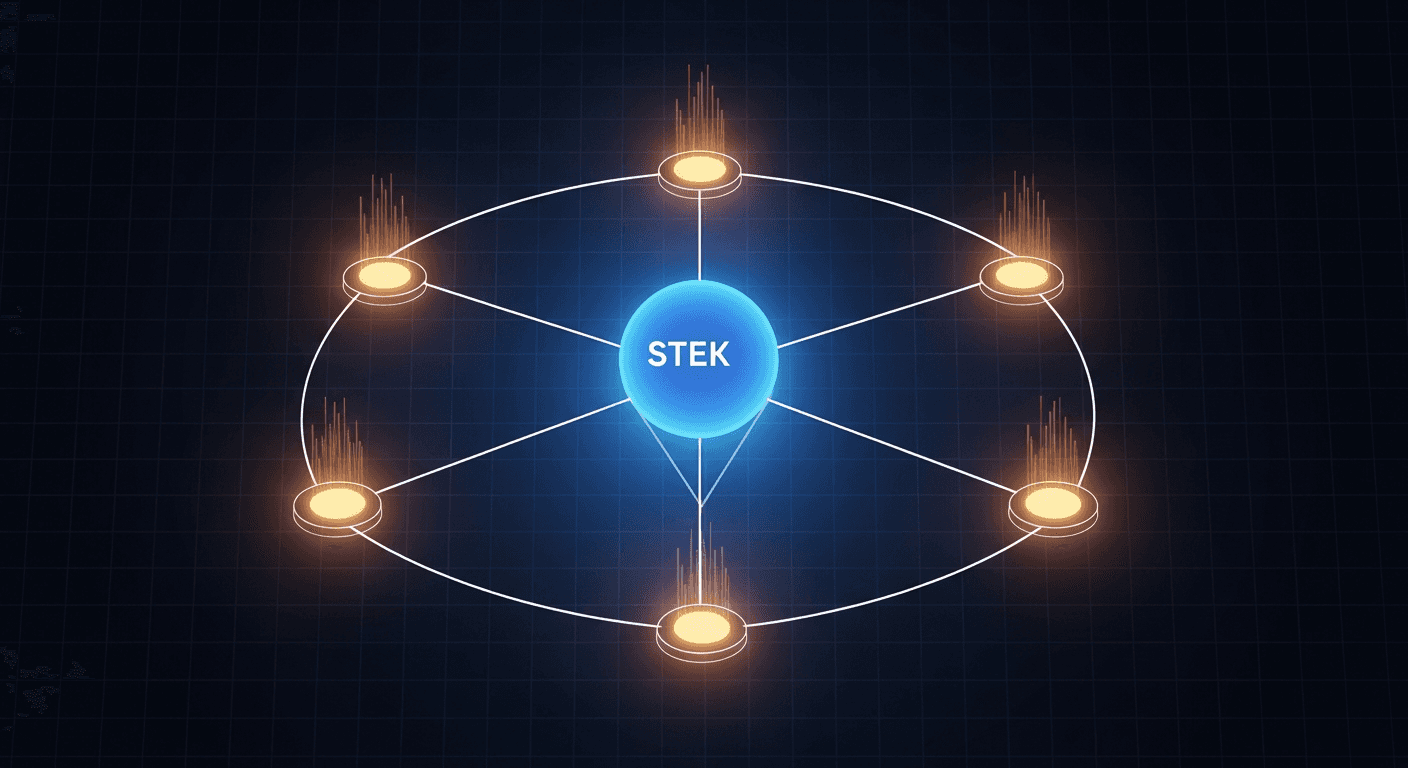
When you stake ETH through Stader, your ETH goes into a pool managed by smart contracts. These contracts distribute the ETH to node operators who run the actual validators on Ethereum's consensus layer. Validators earn staking rewards from block proposals and attestations, and those rewards flow back to ETHx holders through an increasing exchange rate.
The key mechanic: ETHx rewards auto-compound. You don't receive separate reward tokens. Instead, 1 ETHx becomes worth slightly more ETH over time. If you staked 10 ETH and received 10 ETHx, and the rate moves to 1 ETHx = 1.02 ETH, your 10 ETHx is now worth 10.2 ETH.
The permissionless node operator model
To become a node operator on ETHx, you put up a 4 ETH bond per validator plus 0.4 ETH worth of SD (Stader's native token) as additional collateral. That's 4.4 ETH equivalent, compared to 32 ETH for solo staking. Stader ran simulations to verify that 4 ETH is enough to cover penalties from misbehaving validators while still keeping the economics attractive for independent operators.
The SD collateral requirement serves two purposes: it protects user funds if a node operator underperforms, and it aligns operator incentives with the protocol. Operators receive SD rewards on their bonded collateral, so poor performance has direct financial consequences.
Node operators running at current incentive levels are seeing returns around 15% APY, well above what liquid stakers receive. That gap exists because operators take on infrastructure responsibility and lock up capital.
What yields can you earn with Stader Labs?
For liquid stakers holding ETHx, the current reward rate is approximately 2.68% APY. That sits slightly below the Ethereum network average of 3.3%, according to data from DataWallet's 2026 ETH staking report, which puts 35.85M ETH staked (28.9% of supply) at a validator average of 3.3%.
The difference between ETHx's rate and the network average reflects Stader's 10% fee on staking rewards, which the protocol uses for operations and SD token buybacks.
ETHx holders can also deploy their tokens in DeFi. The protocol has integrations with over 40 protocols including Aave v3, Balancer, and Beefy. If you supply ETHx to Aave as collateral, for example, you keep earning staking rewards on your ETH while borrowing against it. The combined yield depends on what you do with the position, but it can push effective returns above 5% with moderate strategy.
What are the risks of staking with Stader Labs?
Liquid staking carries a few specific risks that are worth being clear about.
Smart contract risk is the main one. ETHx contracts have been audited by Sigma Prime, Halborn, and Code4rena, and there's a $1M bug bounty on Immunefi. That doesn't mean bugs are impossible, it means the protocol has done the work most serious protocols do to reduce their likelihood. A contract vulnerability could in principle affect deposited ETH.
Slashing risk is real but small. If a node operator gets slashed by the Ethereum network (for double-signing or going offline at the wrong time), the penalty comes out of the operator's 4 ETH bond first. The SD collateral provides an additional buffer. User funds would only be affected if operator penalties exceeded both the ETH bond and SD collateral combined, which Stader's simulations treat as an extreme scenario.
Exchange rate deviation is another risk. In a market panic, ETHx can trade at a discount to ETH on secondary markets, even while the underlying exchange rate in the protocol climbs. This doesn't affect your position if you hold to redemption, but if you need to sell quickly, you might exit at a loss.
Finally, the SD token price matters for node operators more than for regular stakers. But if SD loses significant value, it could affect the quality of collateral backing validator bonds, which indirectly touches protocol security.
How does Stader compare to Lido and Rocket Pool?
Protocol | Token | Current APY | Node operator model | Min. operator bond | Reward mechanism |
|---|---|---|---|---|---|
Stader Labs | ETHx | ~2.68% | Permissionless | 4 ETH + SD bond | Exchange rate increase |
Lido | stETH | ~2.9% | Curated (whitelisted) | N/A | Daily rebasing |
Rocket Pool | rETH | ~2.8% | Permissionless | 8 ETH + RPL bond | Exchange rate increase |
Lido holds the largest share of staked ETH, around 28% of all staked supply, which has drawn ongoing criticism about centralization. stETH's daily rebasing model means your token balance increases each day rather than the exchange rate rising, which can create complications in some DeFi protocols.
Rocket Pool is Stader's closest structural comparison: both use a non-rebasing token and both allow permissionless node operators. Rocket Pool's minimum is 8 ETH plus RPL collateral. Stader's 4 ETH entry point is lower, which may attract more operators over time, though Rocket Pool has a longer track record and a larger community.
Stader's TVL sits at roughly $329M, substantially smaller than Lido's but growing. Smaller TVL means the protocol has less influence over the broader Ethereum validator set, which some users see as a decentralization advantage.
Beyond protocol-level staking: a simpler path
Managing liquid staking tokens, tracking DeFi integrations, and paying gas on every transaction is work. It makes sense if you have the time and interest in optimizing. But many people want the passive yield without the operational overhead.
Pistachio.fi is a mobile app with a built-in wallet that gives users access to curated DeFi vaults. Each vault carries an expert risk grade so you're not choosing blindly between protocols. Every transaction runs gasless, meaning no ETH management or wallet top-ups to earn yield. For users who want exposure to Ethereum-based yields without learning the mechanics of ETHx, LST accounting, or Aave liquidity positions, that's the tradeoff.
Pistachio also integrates with Awaken.Tax for automatic tax reporting on your yield activity. If you're earning regularly from DeFi positions, that alone saves meaningful time at year-end. And if the security model matters to you, Pistachio's self-custody architecture means you keep control of your funds at every step.
Both approaches work. Stader gives you direct protocol access and maximum flexibility. Pistachio trades some of that control for simplicity and a managed experience. Which matters more depends on what you're actually trying to do.
Getting started with Stader Labs
To stake ETH with Stader, you visit the Stader app and connect a compatible Ethereum wallet. You send ETH, receive ETHx in return, and your rewards begin accruing immediately through the exchange rate mechanism. There's no lock-up; you can unstake through the protocol's withdrawal queue or sell ETHx on secondary markets. If you're new to yield strategies in general, the Ethereum staking yield overview on Pistachio's blog covers the base layer mechanics well.
If you want to run a node operator, the process requires setting up an Ethereum validator node, posting 4 ETH and 0.4 ETH worth of SD in collateral, and running the Stader node software. The documentation at Stader's GitBook covers the setup in detail. Ethereum gas fees for transaction interactions are low, typically under $0.25 for standard operations.
For most retail users, the liquid staking route is the simpler entry point. You skip the node infrastructure, accept a slightly lower yield, and retain full liquidity.
Frequently asked questions
Is Stader Labs staking safe?
Stader Labs' ETHx contracts are audited by Sigma Prime, Halborn, and Code4rena, and backed by a $1M Immunefi bug bounty. Smart contract risk cannot be eliminated entirely, but Stader has done the security work that serious protocols do. The protocol's permissionless node operator design also requires ETH and SD collateral bonds, which means user funds have two layers of protection before slashing penalties would affect depositors.
What is the current APY for DeFi staking with Stader Labs?
The current ETHx reward rate is approximately 2.68% APY for liquid stakers. Node operators running validators earn considerably more, around 15% APY, because they contribute infrastructure and lock up capital. The network-wide average for Ethereum staking is 3.3%, with Stader's rate slightly lower due to the protocol's 10% fee on rewards.
What is the difference between ETHx and stETH?
Both are liquid staking tokens for Ethereum, but they use different reward mechanisms. stETH (Lido) rebases daily, meaning your token balance increases to reflect rewards. ETHx uses an exchange rate model: 1 ETHx becomes worth more ETH over time. The exchange rate model is often simpler to handle in DeFi integrations. Lido's stETH has significantly more TVL and liquidity; Stader's ETHx offers a more decentralized node operator set.
Can I use ETHx in DeFi?
Yes. Stader has integrations with over 40 DeFi protocols including Aave v3, Balancer, and Beefy. You can use ETHx as collateral, in liquidity pools, or in yield strategies. Combining base staking rewards with DeFi yield can push effective returns above 5%, though this adds smart contract exposure and requires active management.
What is the SD token in Stader Labs?
SD is Stader's native token used primarily as collateral by node operators. Operators must post SD equivalent to 0.4 ETH per validator, and they earn SD rewards on that collateral. SD is also used in protocol governance. Liquid stakers holding ETHx do not need to hold SD, though the SD collateral system indirectly protects their deposited ETH.
Last updated: March 2026
Liquid staking has changed how most people think about holding ETH. Instead of locking up tokens and waiting for rewards to accumulate, you deposit into a protocol, get a tradeable receipt token in return, and keep earning while that token sits in your wallet or gets deployed in DeFi. Stader Labs is one of the more interesting players in this space, partly because of how it structured things for node operators.
This guide covers what Stader actually is, how ETHx works mechanically, what yields look like right now, and where it stands relative to the better-known alternatives.
DeFi staking with Stader Labs works through ETHx, a liquid staking token that earns Ethereum proof-of-stake rewards at roughly 2.68% APY as of March 2026. Stader's main differentiator is its permissionless node operator model, which lowers the ETH bond requirement from 32 ETH (solo) to just 4 ETH, opening participation to more validators. The protocol holds around $329M in TVL and has been audited by Sigma Prime, Halborn, and Code4rena. For users who prefer curated access to staking and DeFi yields without managing wallets or gas, platforms like Pistachio.fi offer a simpler path to comparable returns.
Key takeaways
ETHx APY: Stader Labs currently offers around 2.68% on staked ETH, slightly below the Ethereum network average of 3.3%.
Node operators: You can run a validator with 4 ETH bond (plus 0.4 ETH worth of SD tokens), vs. 32 ETH for solo staking.
Audits: ETHx smart contracts are triple-audited (Sigma Prime, Halborn, Code4rena) with a $1M Immunefi bug bounty.
DeFi staking with Stader Labs earns rewards via an auto-compounding exchange rate mechanism, not direct token distributions.
Pistachio.fi offers curated DeFi vault access with expert risk grades and zero gas fees for users who want a managed approach.
What is Stader Labs?
Stader Labs is a liquid staking protocol that lets ETH holders deposit and receive ETHx, a token representing their staked position. The protocol manages the validator setup, reward collection, and reward compounding. You hold ETHx, and as the exchange rate between ETHx and ETH rises over time, so does the value of your position.
The protocol started on other chains (Polygon's MATICX, BNB, Hedera, Near) before expanding to Ethereum with ETHx. The Ethereum product is their most prominent now, and it's where the interesting node operator mechanics sit.
Unlike Lido, which uses a curated set of whitelisted node operators, Stader built ETHx with a permissionless model. Any validator can join without approval, as long as they meet the bond requirements. That design choice matters for decentralization, which we'll get to.
How does Stader Labs staking work?
When you stake ETH through Stader, your ETH goes into a pool managed by smart contracts. These contracts distribute the ETH to node operators who run the actual validators on Ethereum's consensus layer. Validators earn staking rewards from block proposals and attestations, and those rewards flow back to ETHx holders through an increasing exchange rate.
The key mechanic: ETHx rewards auto-compound. You don't receive separate reward tokens. Instead, 1 ETHx becomes worth slightly more ETH over time. If you staked 10 ETH and received 10 ETHx, and the rate moves to 1 ETHx = 1.02 ETH, your 10 ETHx is now worth 10.2 ETH.
The permissionless node operator model
To become a node operator on ETHx, you put up a 4 ETH bond per validator plus 0.4 ETH worth of SD (Stader's native token) as additional collateral. That's 4.4 ETH equivalent, compared to 32 ETH for solo staking. Stader ran simulations to verify that 4 ETH is enough to cover penalties from misbehaving validators while still keeping the economics attractive for independent operators.
The SD collateral requirement serves two purposes: it protects user funds if a node operator underperforms, and it aligns operator incentives with the protocol. Operators receive SD rewards on their bonded collateral, so poor performance has direct financial consequences.
Node operators running at current incentive levels are seeing returns around 15% APY, well above what liquid stakers receive. That gap exists because operators take on infrastructure responsibility and lock up capital.
What yields can you earn with Stader Labs?
For liquid stakers holding ETHx, the current reward rate is approximately 2.68% APY. That sits slightly below the Ethereum network average of 3.3%, according to data from DataWallet's 2026 ETH staking report, which puts 35.85M ETH staked (28.9% of supply) at a validator average of 3.3%.
The difference between ETHx's rate and the network average reflects Stader's 10% fee on staking rewards, which the protocol uses for operations and SD token buybacks.
ETHx holders can also deploy their tokens in DeFi. The protocol has integrations with over 40 protocols including Aave v3, Balancer, and Beefy. If you supply ETHx to Aave as collateral, for example, you keep earning staking rewards on your ETH while borrowing against it. The combined yield depends on what you do with the position, but it can push effective returns above 5% with moderate strategy.
What are the risks of staking with Stader Labs?
Liquid staking carries a few specific risks that are worth being clear about.
Smart contract risk is the main one. ETHx contracts have been audited by Sigma Prime, Halborn, and Code4rena, and there's a $1M bug bounty on Immunefi. That doesn't mean bugs are impossible, it means the protocol has done the work most serious protocols do to reduce their likelihood. A contract vulnerability could in principle affect deposited ETH.
Slashing risk is real but small. If a node operator gets slashed by the Ethereum network (for double-signing or going offline at the wrong time), the penalty comes out of the operator's 4 ETH bond first. The SD collateral provides an additional buffer. User funds would only be affected if operator penalties exceeded both the ETH bond and SD collateral combined, which Stader's simulations treat as an extreme scenario.
Exchange rate deviation is another risk. In a market panic, ETHx can trade at a discount to ETH on secondary markets, even while the underlying exchange rate in the protocol climbs. This doesn't affect your position if you hold to redemption, but if you need to sell quickly, you might exit at a loss.
Finally, the SD token price matters for node operators more than for regular stakers. But if SD loses significant value, it could affect the quality of collateral backing validator bonds, which indirectly touches protocol security.
How does Stader compare to Lido and Rocket Pool?
Protocol | Token | Current APY | Node operator model | Min. operator bond | Reward mechanism |
|---|---|---|---|---|---|
Stader Labs | ETHx | ~2.68% | Permissionless | 4 ETH + SD bond | Exchange rate increase |
Lido | stETH | ~2.9% | Curated (whitelisted) | N/A | Daily rebasing |
Rocket Pool | rETH | ~2.8% | Permissionless | 8 ETH + RPL bond | Exchange rate increase |
Lido holds the largest share of staked ETH, around 28% of all staked supply, which has drawn ongoing criticism about centralization. stETH's daily rebasing model means your token balance increases each day rather than the exchange rate rising, which can create complications in some DeFi protocols.
Rocket Pool is Stader's closest structural comparison: both use a non-rebasing token and both allow permissionless node operators. Rocket Pool's minimum is 8 ETH plus RPL collateral. Stader's 4 ETH entry point is lower, which may attract more operators over time, though Rocket Pool has a longer track record and a larger community.
Stader's TVL sits at roughly $329M, substantially smaller than Lido's but growing. Smaller TVL means the protocol has less influence over the broader Ethereum validator set, which some users see as a decentralization advantage.
Beyond protocol-level staking: a simpler path
Managing liquid staking tokens, tracking DeFi integrations, and paying gas on every transaction is work. It makes sense if you have the time and interest in optimizing. But many people want the passive yield without the operational overhead.
Pistachio.fi is a mobile app with a built-in wallet that gives users access to curated DeFi vaults. Each vault carries an expert risk grade so you're not choosing blindly between protocols. Every transaction runs gasless, meaning no ETH management or wallet top-ups to earn yield. For users who want exposure to Ethereum-based yields without learning the mechanics of ETHx, LST accounting, or Aave liquidity positions, that's the tradeoff.
Pistachio also integrates with Awaken.Tax for automatic tax reporting on your yield activity. If you're earning regularly from DeFi positions, that alone saves meaningful time at year-end. And if the security model matters to you, Pistachio's self-custody architecture means you keep control of your funds at every step.
Both approaches work. Stader gives you direct protocol access and maximum flexibility. Pistachio trades some of that control for simplicity and a managed experience. Which matters more depends on what you're actually trying to do.
Getting started with Stader Labs
To stake ETH with Stader, you visit the Stader app and connect a compatible Ethereum wallet. You send ETH, receive ETHx in return, and your rewards begin accruing immediately through the exchange rate mechanism. There's no lock-up; you can unstake through the protocol's withdrawal queue or sell ETHx on secondary markets. If you're new to yield strategies in general, the Ethereum staking yield overview on Pistachio's blog covers the base layer mechanics well.
If you want to run a node operator, the process requires setting up an Ethereum validator node, posting 4 ETH and 0.4 ETH worth of SD in collateral, and running the Stader node software. The documentation at Stader's GitBook covers the setup in detail. Ethereum gas fees for transaction interactions are low, typically under $0.25 for standard operations.
For most retail users, the liquid staking route is the simpler entry point. You skip the node infrastructure, accept a slightly lower yield, and retain full liquidity.
Frequently asked questions
Is Stader Labs staking safe?
Stader Labs' ETHx contracts are audited by Sigma Prime, Halborn, and Code4rena, and backed by a $1M Immunefi bug bounty. Smart contract risk cannot be eliminated entirely, but Stader has done the security work that serious protocols do. The protocol's permissionless node operator design also requires ETH and SD collateral bonds, which means user funds have two layers of protection before slashing penalties would affect depositors.
What is the current APY for DeFi staking with Stader Labs?
The current ETHx reward rate is approximately 2.68% APY for liquid stakers. Node operators running validators earn considerably more, around 15% APY, because they contribute infrastructure and lock up capital. The network-wide average for Ethereum staking is 3.3%, with Stader's rate slightly lower due to the protocol's 10% fee on rewards.
What is the difference between ETHx and stETH?
Both are liquid staking tokens for Ethereum, but they use different reward mechanisms. stETH (Lido) rebases daily, meaning your token balance increases to reflect rewards. ETHx uses an exchange rate model: 1 ETHx becomes worth more ETH over time. The exchange rate model is often simpler to handle in DeFi integrations. Lido's stETH has significantly more TVL and liquidity; Stader's ETHx offers a more decentralized node operator set.
Can I use ETHx in DeFi?
Yes. Stader has integrations with over 40 DeFi protocols including Aave v3, Balancer, and Beefy. You can use ETHx as collateral, in liquidity pools, or in yield strategies. Combining base staking rewards with DeFi yield can push effective returns above 5%, though this adds smart contract exposure and requires active management.
What is the SD token in Stader Labs?
SD is Stader's native token used primarily as collateral by node operators. Operators must post SD equivalent to 0.4 ETH per validator, and they earn SD rewards on that collateral. SD is also used in protocol governance. Liquid stakers holding ETHx do not need to hold SD, though the SD collateral system indirectly protects their deposited ETH.

Cross-chain crypto swaps: how Li.Fi powers Pistachio's one-tap zaps (2026)

Etherfuse stablebonds: earn government bond yields on-chain (2026)
How to earn money online in 2026 (crypto yield vs. the rest)
Linea crypto explained: what it is and how it works (2026)

Ethereum wallet guide 2026 (ethernet wallet explained)
DeFi Staking with Stader Labs: How ETHx Works in 2026

High-liquidity crypto exchanges: PancakeSwap guide 2026

What is Raydium? How Solana's AMM Works in 2026

Passive Income Ideas for 2026: 10 Ways That Actually Work

Hong Kong crypto news 2026: licenses, stablecoins, and regulation
©2026 Derechos de autor, PistachioFi Inc.
©2026 Derechos de autor, PistachioFi Inc.
©2026 Derechos de autor, PistachioFi Inc.