Smart Accounts in Crypto: The Wallet Upgrade You Didn't Know You Needed
Smart Accounts in Crypto: The Wallet Upgrade You Didn't Know You Needed

Smart Accounts in Crypto: The Wallet Upgrade You Didn't Know You Needed
Smart Accounts in Crypto: The Wallet Upgrade You Didn't Know You Needed
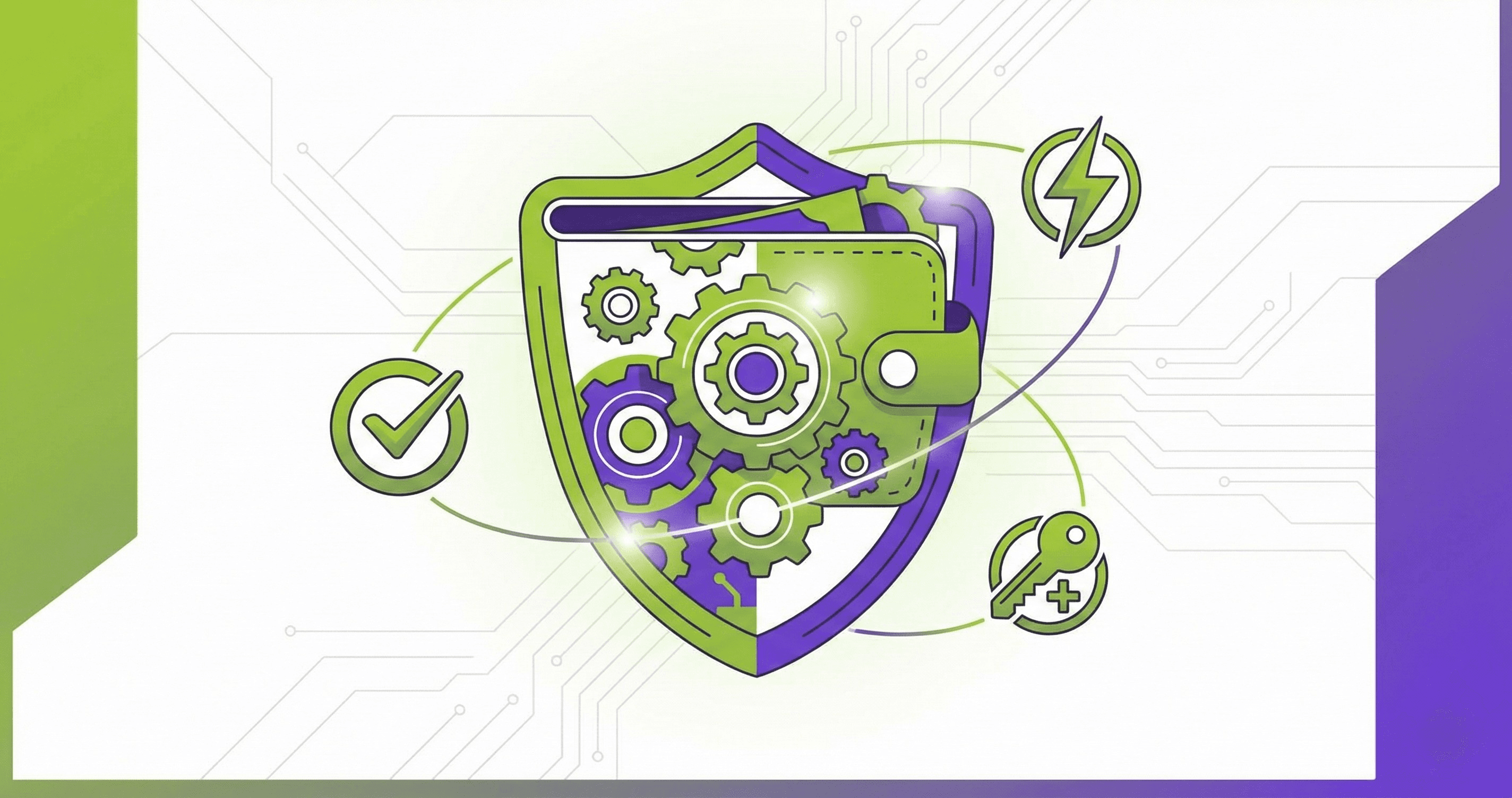
Your crypto wallet is stuck in 2015. You write down 12 words on paper and pray you never lose them. You pay gas fees just to approve a token. You click "confirm" six times to complete one trade. And if you lose your seed phrase? Your funds are gone forever.
This isn't how modern software works. Your bank app doesn't make you pay a fee to check your balance. Your email doesn't vanish if you forget your password. Yet crypto wallets still operate like early internet software. Pistachio.fi is a crypto yield platform that uses smart accounts to eliminate these frustrations entirely.
Key takeaways
Smart accounts are crypto wallets powered by smart contracts instead of single private keys, enabling recovery, gasless transactions, and programmable rules.
No more seed phrase anxiety: Social recovery lets trusted contacts help you regain access without being able to steal your funds.
Gasless transactions: Apps can cover gas costs, so you never need ETH just to move your tokens.
Already live: ERC-4337 shipped in 2023, and millions of smart accounts exist on Ethereum, Base, Polygon, and Arbitrum.
What is a smart account?
A smart account is a crypto wallet that runs on a smart contract instead of being controlled by a single private key.
Think of a traditional wallet like a safe with one key. Lose the key, lose everything inside. A smart account is more like a safe with programmable locks. You can set up backup keys, require multiple approvals, or create rules for who can access what and when.
The technical name is "account abstraction," but that term obscures more than it reveals. What matters: you can recover your wallet if you lose access. You can skip gas fees. You can batch multiple actions into one click.
This isn't theoretical. The ERC-4337 standard shipped in 2023, and millions of smart accounts now exist on Base, Polygon, and Arbitrum. For a deeper dive into the technical architecture, see our guide on what is a smart account.
What's wrong with traditional wallets?
To understand why smart accounts matter, you need to understand what they're replacing.
Traditional crypto wallets are called Externally Owned Accounts, or EOAs. MetaMask, Coinbase Wallet, most hardware wallets. They work like this: you have a private key (that 12 or 24-word seed phrase), and that key controls your funds. No key, no access. No exceptions.
This creates real problems.
Recovery is impossible. Forget your seed phrase and your funds are gone. No customer support. No password reset email. Chainalysis estimates 3-4 million Bitcoin are permanently inaccessible due to lost keys.
Gas fees on everything. Want to swap tokens? Pay gas. Approve a contract? Pay gas first. Claim an airdrop? Gas. Explaining why someone needs ETH to move their USDC is a conversation nobody enjoys.
Complexity up front. EOAs force users to understand nonces, gas limits, and transaction signing before they can do anything useful. It's like requiring someone to understand TCP/IP before sending an email.
Single point of failure. One key means one vulnerability. Phishing attacks, malware, or a compromised device can drain your wallet instantly. No spending limits. No multi-approval options. No contract restrictions. For tips on protecting yourself, read how to stop getting hacked.
These aren't edge cases. They're daily reality for crypto users, and the main reason mainstream adoption has stalled.
How do smart accounts work?
Smart accounts move wallet logic into a smart contract. Instead of "whoever has the key controls the funds," you define custom rules.
ERC-4337 makes this possible without changing Ethereum itself. Here's what that means in practice:
Your wallet becomes programmable. Set rules like "require two approvals for transactions over $1,000" or "allow this app to spend up to $50 per day without asking." The wallet enforces these automatically.
Someone else can pay your gas. Apps can cover gas costs for their users, or you can pay gas in any token, not just ETH. From the user's perspective, transactions just work.
Multiple actions become one transaction. Instead of approve, then swap, then stake (three transactions, three gas fees, three confirmations), smart accounts batch everything into a single action.
Recovery becomes possible. Designate trusted contacts or devices as backup signers. If you lose access, they can help you regain control. They can never steal your funds on their own.
None of this requires learning new terminology. The point is that wallet developers can finally build experiences that match what people expect from modern apps. See the next evolution in Ethereum UX for more on where this is heading.
Why do gasless transactions matter?
Gasless transactions are the single biggest UX improvement smart accounts enable. Smart accounts can be configured so users never see gas fees. The app pays, a relayer covers it, or gas is deducted from the tokens you're already moving.
Gas is the single biggest friction point in crypto UX. New users don't understand why they need one token to move another. Even experienced users hate the unpredictability of gas prices and the hassle of keeping ETH in every wallet on every chain.
Gasless transactions make crypto feel like Venmo. Send money, it arrives. No mental math, no failed transactions.
How does social recovery work?
Social recovery replaces seed phrases with a network of trusted contacts who can help you regain access to your wallet.
Seed phrases are a terrible backup system. They work, but they put all the risk on the user. One mistake and everything is lost. A photo saved to the wrong cloud folder. A piece of paper thrown away. A hard drive that fails.
Smart accounts enable social recovery. You choose trusted contacts: friends, family, or other wallets you control. If you lose access, a threshold of these guardians can approve recovery to a new device. They can help you recover, but they can't initiate transactions or access your funds on their own.
This is how Apple accounts work. It's how most secure systems work. And now it's possible for crypto. Learn more about how Pistachio handles recovery.
Batch transactions and session keys
In DeFi, simple actions often require multiple transactions. Swapping a token might mean approving the contract, then executing the swap. Depositing into a vault might mean approving, depositing, then staking the receipt token.
Smart accounts collapse these into one action. You see one confirmation, pay one fee (or none), and everything executes atomically. If any step fails, they all fail. No stuck transactions. No partial executions.
Session keys solve another annoyance. Traditional wallets are all-or-nothing: either an app can do anything with your funds, or nothing at all. This forces users to approve every single action, creating endless "confirm transaction" popups.
Smart accounts support granular permissions. Give an app a session key that lets it execute trades up to a certain amount, only on certain contracts, for a limited time. It's like giving a valet your car key instead of your house keys.
Who's using smart accounts today?
Blockchain games use them to let players make in-game transactions without constant wallet popups. Session keys authorize the game to move items and tokens within defined limits.
DeFi protocols use batched transactions to simplify complex operations. What used to take five clicks now takes one.
Onboarding tools like Tria build smart account infrastructure that lets new users start with email login and gasless transactions, then add more security as they grow into crypto.
The pattern: teams building for mainstream users are adopting smart accounts because they solve UX problems that traditional wallets can't.
How Pistachio uses smart accounts
At Pistachio.fi, smart accounts are foundational. Not an add-on feature.
Gasless by default. Pistachio covers transaction costs. You never need ETH or any other native token just to use the platform.
Self-custody without the headaches. Your funds are yours. Pistachio can't access them, freeze them, or move them without your approval. But you also get modern security: social recovery options, multi-signature configurations for larger accounts, and spending controls. See our security overview for details.
One confirmation, one outcome. Complex DeFi operations become single actions. The smart account handles batching and execution. It either works or it doesn't. No partial states.
The goal: make self-custody feel as smooth as a centralized exchange, without giving up security or ownership. Smart accounts make that possible.
What's coming next?
Smart accounts are still early. The tooling is improving, more wallets are adopting the standard, and new features keep shipping on top of ERC-4337.
Some things to watch:
Cross-chain accounts. Managing the same smart account across multiple blockchains, with unified balances and permissions.
Automated strategies. Rules like "if ETH drops below $X, swap to stables" that execute without manual intervention.
Institutional features. Multi-signature setups, role-based permissions, and audit trails for business treasury management.
The direction is clear: crypto wallets will become invisible infrastructure rather than daily friction.
Getting started
If you're using crypto today, you don't need to do anything dramatic. Smart accounts are backward compatible. You can still interact with all the same apps and tokens. The difference is in how your wallet manages those interactions.
Platforms like Pistachio already use smart accounts under the hood. If you're tired of gas fees, seed phrase anxiety, and clicking "confirm" twelve times for one action, that's the problem smart accounts solve.
The technology is production-ready. The UX improvements are real. The gap between how crypto works and how it should work is finally closing.
Last updated: January 2026
Frequently asked questions
Are smart accounts safe?
Smart accounts are as safe as the smart contracts they run on. ERC-4337 has been audited extensively and is used by millions of accounts. The main risks are smart contract bugs (rare in audited code) and misconfigured recovery settings. Major protocols like Pistachio use battle-tested implementations.
Do I need ETH to use a smart account?
No. Smart accounts can be configured for gasless transactions where the app or a relayer pays gas costs. On Pistachio.fi, all transactions are gasless by default.
What's the difference between a smart account and a regular wallet?
A regular wallet (EOA) is controlled by a single private key. Lose the key, lose everything. A smart account runs on a smart contract with programmable rules: social recovery, spending limits, batched transactions, and gasless operations. Same blockchain, much better UX.
Can I convert my existing wallet to a smart account?
You can't convert an existing EOA, but you can create a new smart account and transfer your assets to it. Many platforms like Pistachio create smart accounts automatically when you sign up.
Your crypto wallet is stuck in 2015. You write down 12 words on paper and pray you never lose them. You pay gas fees just to approve a token. You click "confirm" six times to complete one trade. And if you lose your seed phrase? Your funds are gone forever.
This isn't how modern software works. Your bank app doesn't make you pay a fee to check your balance. Your email doesn't vanish if you forget your password. Yet crypto wallets still operate like early internet software. Pistachio.fi is a crypto yield platform that uses smart accounts to eliminate these frustrations entirely.
Key takeaways
Smart accounts are crypto wallets powered by smart contracts instead of single private keys, enabling recovery, gasless transactions, and programmable rules.
No more seed phrase anxiety: Social recovery lets trusted contacts help you regain access without being able to steal your funds.
Gasless transactions: Apps can cover gas costs, so you never need ETH just to move your tokens.
Already live: ERC-4337 shipped in 2023, and millions of smart accounts exist on Ethereum, Base, Polygon, and Arbitrum.
What is a smart account?
A smart account is a crypto wallet that runs on a smart contract instead of being controlled by a single private key.
Think of a traditional wallet like a safe with one key. Lose the key, lose everything inside. A smart account is more like a safe with programmable locks. You can set up backup keys, require multiple approvals, or create rules for who can access what and when.
The technical name is "account abstraction," but that term obscures more than it reveals. What matters: you can recover your wallet if you lose access. You can skip gas fees. You can batch multiple actions into one click.
This isn't theoretical. The ERC-4337 standard shipped in 2023, and millions of smart accounts now exist on Base, Polygon, and Arbitrum. For a deeper dive into the technical architecture, see our guide on what is a smart account.
What's wrong with traditional wallets?
To understand why smart accounts matter, you need to understand what they're replacing.
Traditional crypto wallets are called Externally Owned Accounts, or EOAs. MetaMask, Coinbase Wallet, most hardware wallets. They work like this: you have a private key (that 12 or 24-word seed phrase), and that key controls your funds. No key, no access. No exceptions.
This creates real problems.
Recovery is impossible. Forget your seed phrase and your funds are gone. No customer support. No password reset email. Chainalysis estimates 3-4 million Bitcoin are permanently inaccessible due to lost keys.
Gas fees on everything. Want to swap tokens? Pay gas. Approve a contract? Pay gas first. Claim an airdrop? Gas. Explaining why someone needs ETH to move their USDC is a conversation nobody enjoys.
Complexity up front. EOAs force users to understand nonces, gas limits, and transaction signing before they can do anything useful. It's like requiring someone to understand TCP/IP before sending an email.
Single point of failure. One key means one vulnerability. Phishing attacks, malware, or a compromised device can drain your wallet instantly. No spending limits. No multi-approval options. No contract restrictions. For tips on protecting yourself, read how to stop getting hacked.
These aren't edge cases. They're daily reality for crypto users, and the main reason mainstream adoption has stalled.
How do smart accounts work?
Smart accounts move wallet logic into a smart contract. Instead of "whoever has the key controls the funds," you define custom rules.
ERC-4337 makes this possible without changing Ethereum itself. Here's what that means in practice:
Your wallet becomes programmable. Set rules like "require two approvals for transactions over $1,000" or "allow this app to spend up to $50 per day without asking." The wallet enforces these automatically.
Someone else can pay your gas. Apps can cover gas costs for their users, or you can pay gas in any token, not just ETH. From the user's perspective, transactions just work.
Multiple actions become one transaction. Instead of approve, then swap, then stake (three transactions, three gas fees, three confirmations), smart accounts batch everything into a single action.
Recovery becomes possible. Designate trusted contacts or devices as backup signers. If you lose access, they can help you regain control. They can never steal your funds on their own.
None of this requires learning new terminology. The point is that wallet developers can finally build experiences that match what people expect from modern apps. See the next evolution in Ethereum UX for more on where this is heading.
Why do gasless transactions matter?
Gasless transactions are the single biggest UX improvement smart accounts enable. Smart accounts can be configured so users never see gas fees. The app pays, a relayer covers it, or gas is deducted from the tokens you're already moving.
Gas is the single biggest friction point in crypto UX. New users don't understand why they need one token to move another. Even experienced users hate the unpredictability of gas prices and the hassle of keeping ETH in every wallet on every chain.
Gasless transactions make crypto feel like Venmo. Send money, it arrives. No mental math, no failed transactions.
How does social recovery work?
Social recovery replaces seed phrases with a network of trusted contacts who can help you regain access to your wallet.
Seed phrases are a terrible backup system. They work, but they put all the risk on the user. One mistake and everything is lost. A photo saved to the wrong cloud folder. A piece of paper thrown away. A hard drive that fails.
Smart accounts enable social recovery. You choose trusted contacts: friends, family, or other wallets you control. If you lose access, a threshold of these guardians can approve recovery to a new device. They can help you recover, but they can't initiate transactions or access your funds on their own.
This is how Apple accounts work. It's how most secure systems work. And now it's possible for crypto. Learn more about how Pistachio handles recovery.
Batch transactions and session keys
In DeFi, simple actions often require multiple transactions. Swapping a token might mean approving the contract, then executing the swap. Depositing into a vault might mean approving, depositing, then staking the receipt token.
Smart accounts collapse these into one action. You see one confirmation, pay one fee (or none), and everything executes atomically. If any step fails, they all fail. No stuck transactions. No partial executions.
Session keys solve another annoyance. Traditional wallets are all-or-nothing: either an app can do anything with your funds, or nothing at all. This forces users to approve every single action, creating endless "confirm transaction" popups.
Smart accounts support granular permissions. Give an app a session key that lets it execute trades up to a certain amount, only on certain contracts, for a limited time. It's like giving a valet your car key instead of your house keys.
Who's using smart accounts today?
Blockchain games use them to let players make in-game transactions without constant wallet popups. Session keys authorize the game to move items and tokens within defined limits.
DeFi protocols use batched transactions to simplify complex operations. What used to take five clicks now takes one.
Onboarding tools like Tria build smart account infrastructure that lets new users start with email login and gasless transactions, then add more security as they grow into crypto.
The pattern: teams building for mainstream users are adopting smart accounts because they solve UX problems that traditional wallets can't.
How Pistachio uses smart accounts
At Pistachio.fi, smart accounts are foundational. Not an add-on feature.
Gasless by default. Pistachio covers transaction costs. You never need ETH or any other native token just to use the platform.
Self-custody without the headaches. Your funds are yours. Pistachio can't access them, freeze them, or move them without your approval. But you also get modern security: social recovery options, multi-signature configurations for larger accounts, and spending controls. See our security overview for details.
One confirmation, one outcome. Complex DeFi operations become single actions. The smart account handles batching and execution. It either works or it doesn't. No partial states.
The goal: make self-custody feel as smooth as a centralized exchange, without giving up security or ownership. Smart accounts make that possible.
What's coming next?
Smart accounts are still early. The tooling is improving, more wallets are adopting the standard, and new features keep shipping on top of ERC-4337.
Some things to watch:
Cross-chain accounts. Managing the same smart account across multiple blockchains, with unified balances and permissions.
Automated strategies. Rules like "if ETH drops below $X, swap to stables" that execute without manual intervention.
Institutional features. Multi-signature setups, role-based permissions, and audit trails for business treasury management.
The direction is clear: crypto wallets will become invisible infrastructure rather than daily friction.
Getting started
If you're using crypto today, you don't need to do anything dramatic. Smart accounts are backward compatible. You can still interact with all the same apps and tokens. The difference is in how your wallet manages those interactions.
Platforms like Pistachio already use smart accounts under the hood. If you're tired of gas fees, seed phrase anxiety, and clicking "confirm" twelve times for one action, that's the problem smart accounts solve.
The technology is production-ready. The UX improvements are real. The gap between how crypto works and how it should work is finally closing.
Last updated: January 2026
Frequently asked questions
Are smart accounts safe?
Smart accounts are as safe as the smart contracts they run on. ERC-4337 has been audited extensively and is used by millions of accounts. The main risks are smart contract bugs (rare in audited code) and misconfigured recovery settings. Major protocols like Pistachio use battle-tested implementations.
Do I need ETH to use a smart account?
No. Smart accounts can be configured for gasless transactions where the app or a relayer pays gas costs. On Pistachio.fi, all transactions are gasless by default.
What's the difference between a smart account and a regular wallet?
A regular wallet (EOA) is controlled by a single private key. Lose the key, lose everything. A smart account runs on a smart contract with programmable rules: social recovery, spending limits, batched transactions, and gasless operations. Same blockchain, much better UX.
Can I convert my existing wallet to a smart account?
You can't convert an existing EOA, but you can create a new smart account and transfer your assets to it. Many platforms like Pistachio create smart accounts automatically when you sign up.

Cross-chain crypto swaps: how Li.Fi powers Pistachio's one-tap zaps (2026)

Etherfuse stablebonds: earn government bond yields on-chain (2026)
How to earn money online in 2026 (crypto yield vs. the rest)
Linea crypto explained: what it is and how it works (2026)
Ethereum wallet guide 2026 (ethernet wallet explained)
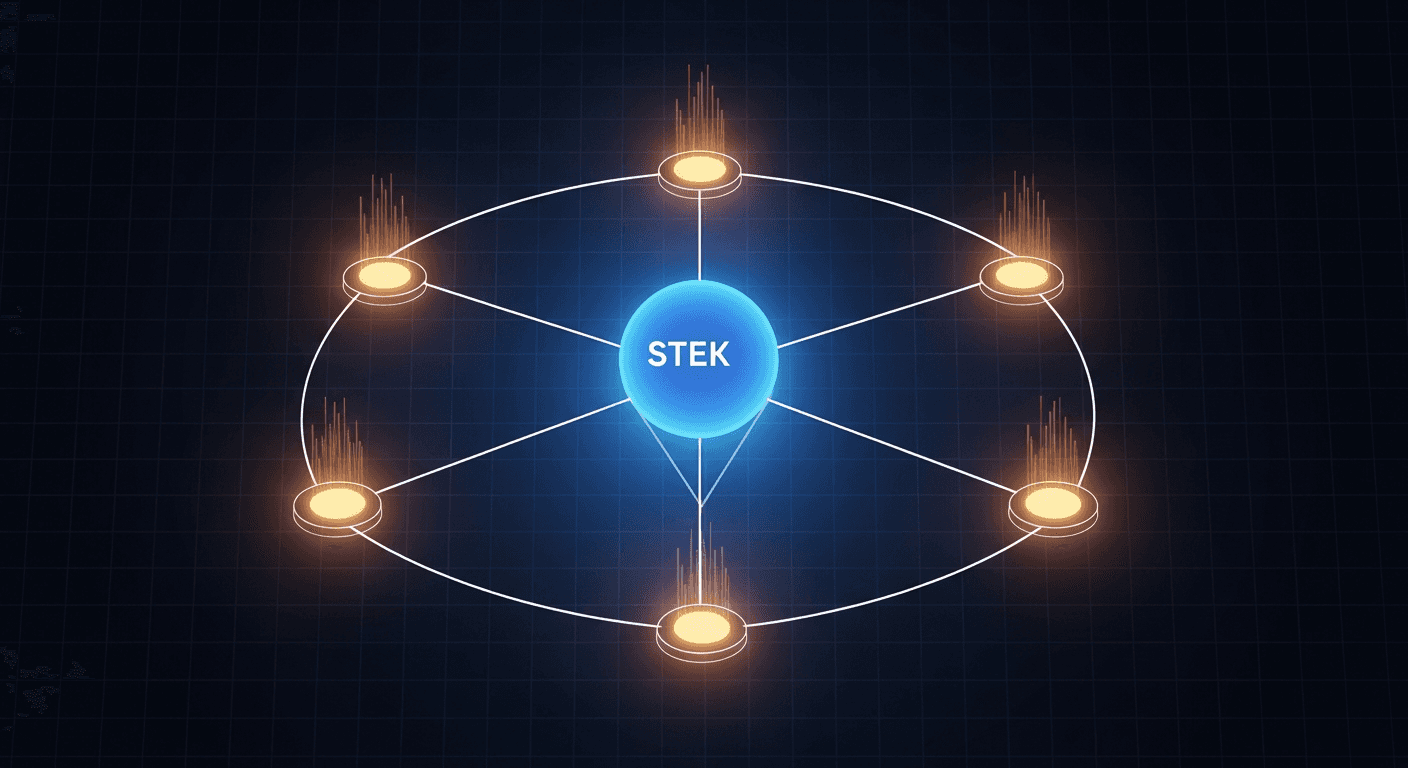
DeFi Staking with Stader Labs: How ETHx Works in 2026

High-liquidity crypto exchanges: PancakeSwap guide 2026
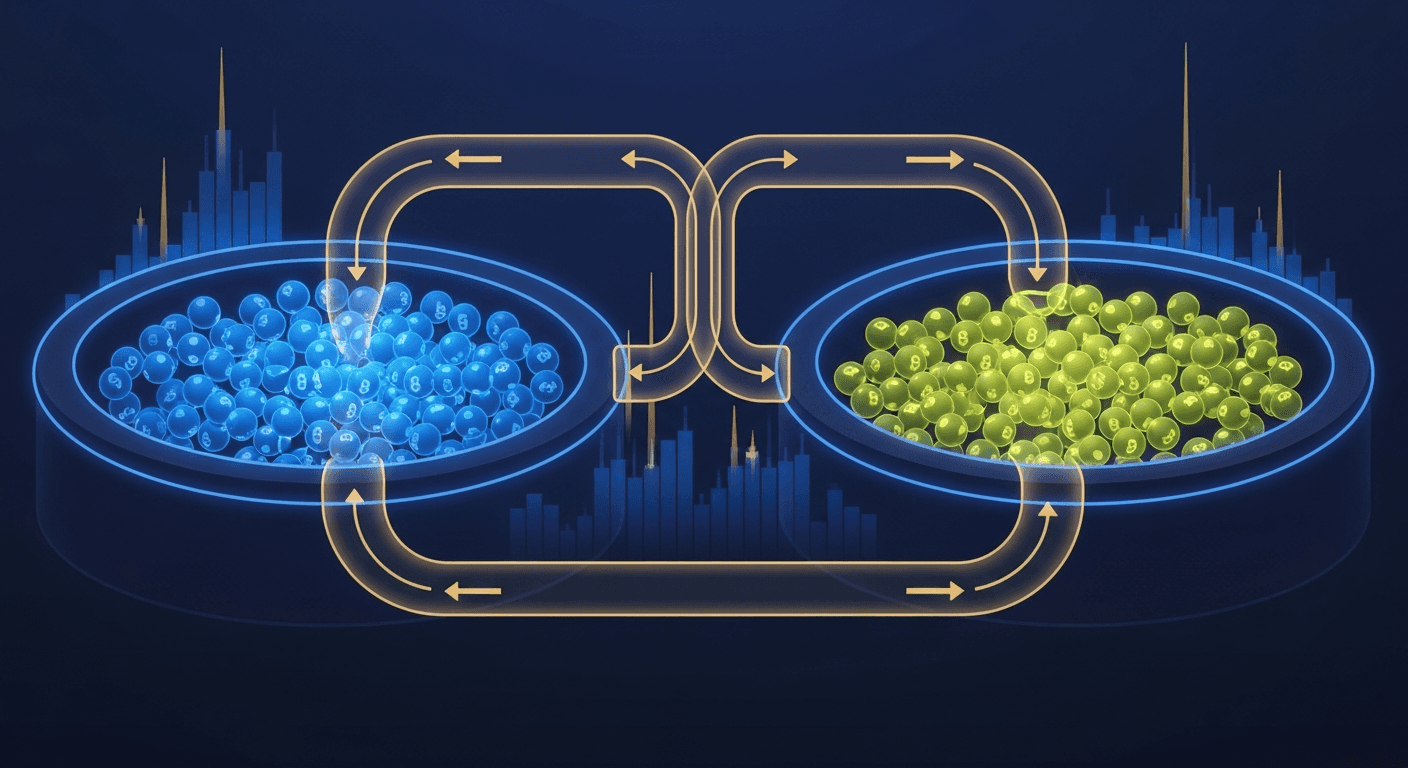
What is Raydium? How Solana's AMM Works in 2026
Passive Income Ideas for 2026: 10 Ways That Actually Work

Hong Kong crypto news 2026: licenses, stablecoins, and regulation
©2026 Derechos de autor, PistachioFi Inc.
©2026 Derechos de autor, PistachioFi Inc.
©2026 Derechos de autor, PistachioFi Inc.