Crypto Markets News 2026: What's Happening Right Now
Crypto Markets News 2026: What's Happening Right Now

Crypto Markets News 2026: What's Happening Right Now
Crypto Markets News 2026: What's Happening Right Now

Last updated: March 2026
The 2026 crypto market has done a number on investor expectations. Bitcoin started the year near $91,500 and has since shed roughly 22% of its value. Ethereum has fallen harder, down around 34% year-to-date. Together, those moves triggered what CoinGecko recorded as the worst start to any year in the data going back to 2013.
But "market down" is only part of the story. Underneath the price action, some of the most important structural shifts in crypto's short history are taking shape: regulatory clarity in the U.S., sovereign wealth funds buying Bitcoin dips, and Ethereum protocol upgrades that could change how ordinary users interact with the chain. This article covers all of it.
The 2026 crypto market carries a total capitalization of roughly $2.48 trillion, with Bitcoin holding above 57% dominance. A steep early-year drawdown brought BTC to around $71,000 and ETH to near $2,050, yet on-chain activity and DeFi TVL remain resilient above $100 billion. Regulatory coordination in the U.S. finally got moving, with the SEC and CFTC launching Project Crypto on January 30. For DeFi yields, Ethereum staking returns 3-5% APY and curated yield platforms offer structured access to a wider range. Compare methods, risk profiles, and fee structures before choosing.
Key takeaways
Crypto markets news in 2026 is defined by a sharp drawdown, strong institutional buying, and long-awaited regulatory movement in the U.S.
Bitcoin sits near $71,000 with total crypto market cap around $2.48 trillion as of early March 2026, per CoinGecko.
DeFi TVL holds above $100 billion despite the sell-off, signaling that yield-seeking behavior hasn't vanished.
ETH staking pays 3.3–5.69% APY depending on method, and structured DeFi vaults can reach higher.
Regulation is moving fast: SEC, CFTC, and U.S. Congress all advanced crypto frameworks in the first two months of 2026.
What happened to prices in early 2026?
Bitcoin closed 2025 at around $91,500. By early March 2026 it was trading closer to $71,000, a decline of about 22%. Ethereum's fall has been steeper: from roughly $3,100 to $2,054, down over 34%.
The sell-off was real and painful for anyone who bought near the highs. Long-term Bitcoin holders started distributing in January. Liquidations piled up in February. At one point, a single 72-hour window cleared $2.56 billion in Bitcoin long positions, according to exchange data reported by CoinDesk.
Some context helps here. Bitcoin hit $126,000 in October 2025. The current drawdown is large in dollar terms, but the market has been through 40-50% corrections before and recovered to new highs within a year. That's not a prediction, just a pattern.
Asset | Jan 1, 2026 | Early March 2026 | Change |
|---|---|---|---|
Bitcoin (BTC) | ~$91,500 | ~$71,318 | -22% |
Ethereum (ETH) | ~$3,100 | ~$2,054 | -34% |
Total market cap | ~$3.2T | ~$2.48T | -22.5% |
Bitcoin dominance | ~54% | ~57% | +3pp |
Bitcoin's dominance actually ticked up during the drawdown. When the market gets nervous, capital flows back to BTC. That's been the pattern in every cycle since 2018.
The regulatory shift most people missed
On January 29 and 30, 2026, the SEC and CFTC made a joint announcement that surprised observers across the industry. The two agencies launched "Project Crypto," framing it as a coordinated effort to eliminate duplicative compliance burdens and bring coherent federal oversight to digital assets. For years, the biggest complaint from serious crypto companies was jurisdictional uncertainty between the two regulators. That appears to be ending.
On the legislative side, the U.S. House passed the Digital Asset Clarity Act (CLARITY Act) in July 2025. A parallel bill, the GENIUS Act, sets a hard deadline for stablecoin rules: supervisory agencies must publish dollar-backed stablecoin regulations by July 18, 2026, with full implementation required by January 18, 2027.
In Europe, MiCA Phase 2 went live in December 2024, covering crypto asset service providers broadly. The EU framework is now ahead of the U.S. on paper, though American institutional capital flows suggest the U.S. market is already moving.
None of this resolves everything overnight. But the directional shift is meaningful, and institutional compliance teams are noticing it.
Institutions kept buying through the dip
Here's the detail that got buried under the price headlines: sovereign wealth funds from Abu Dhabi used the February drawdown to add spot Bitcoin ETF exposure. Mubadala Investment Company and Al Warda Investments both disclosed positions. The Qatar Investment Authority and Norway's NBIM also made purchases.
That's not retail panic buying. Those are some of the most methodical capital allocators on the planet, treating a 22% drawdown as a discount window.
Bitcoin ETF assets under management crossed $200 billion in early March 2026, up from roughly $120 billion at the start of the year despite price declines. New inflows offset the market value drop. A Coinbase Institutional survey found 80% of institutional investors plan to increase their crypto allocations in 2026, with 59% targeting above 5% of their total portfolio.
As of Q3 2025, at least 172 publicly traded companies held Bitcoin on their balance sheets, a 40% increase from the quarter before. That number is almost certainly higher now.
How are DeFi yields holding up?
DeFi total value locked fell from about $120 billion to roughly $105 billion through the early 2026 sell-off, per DeFiLlama. That's a 12% decline against a market that fell 22-34% in price terms. DeFi held up better than the assets within it.
Ethereum base staking yield sits at 3.3% APY for validators running MEV-Boost setups, that climbs to 5.69%. The range for most users through liquid staking protocols lands between 3 and 4.5% APY right now.
The more interesting yields sit inside curated DeFi vaults: lending pools, liquidity strategies, and structured positions that can return 6-12% depending on the protocol and risk level. The challenge has always been assessing which vaults are worth the risk. A poorly audited contract or a protocol with inflated TVL numbers can erase gains fast.
This is where platforms like Pistachio.fi come in. Pistachio is a crypto yield platform that filters DeFi vaults through an expert risk-grading system, so users see yield alongside a structured assessment of what they're actually taking on. Every vault carries a risk grade, gas fees are zeroed out at the application layer, and positions connect to passive income strategies without requiring users to manually manage gas or protocol interactions. It also integrates directly with Awaken.Tax for automated crypto tax reporting, which matters increasingly as jurisdictions tighten their frameworks.
For anyone trying to earn yield in 2026 without flying blind, that kind of structured access is genuinely different from just bridging assets to a random protocol and hoping for the best. You can review how the top yield platforms compare if you want a broader picture of what's available.
Stablecoins and the quiet story no one's covering
Stablecoins are the least exciting part of crypto to most people. They're also the fastest-growing part right now.
Confirmed as the number one crypto use case by both payment volume and user count, stablecoins have crossed from niche DeFi instrument to functional payment rail. The GENIUS Act deadline effectively forces the U.S. government to define rules for dollar-backed stablecoins by mid-2026. Some analysts project the total stablecoin market cap could reach $1.2 trillion by end of 2028.
Real-world asset tokenization is growing alongside it. Treasuries, private credit, and real estate are moving on-chain as regulatory clarity makes institutional custody more viable. This is a slow story, but it's building infrastructure that will matter in the next cycle.
The AI fraud surge is worth taking seriously
One thing the broader market news tends to underweight: fraud losses are accelerating in unusual ways.
Protocol hacks are actually down. Crypto hacking losses fell 98.2% in February 2026 to $26.5 million, compared to $112.5 million across the same period last year. Code security has gotten significantly better.
Social engineering, though, is going the other direction. AI-enabled fraud is up 450% year-on-year. Impersonation scams have jumped 1,400%. The attack vector has shifted from breaking contracts to breaking people, fake support agents, deepfake founders, and AI-generated phishing that's much harder to spot than anything that came before.
Self-custody with social recovery mechanisms addresses part of this. For a look at how recovery actually works without a seed phrase, the Pistachio recovery overview walks through the model in practical terms.
What's coming in the second half of 2026
Two Ethereum upgrades are on the roadmap. "Glamsterdam" in H1 2026 brings parallel execution and higher gas limits (expected to climb from 60 million to over 100 million per block). "Hegotá" in H2 addresses censorship resistance and adds native account abstraction at the protocol level, which simplifies wallet UX significantly.
Staking APY will likely compress gradually as total staked ETH grows. The current 3.3-5.69% range reflects a mature but not yet saturated staking market.
On the macro side, the market is watching Federal Reserve rate decisions closely. If rate cuts materialize in Q2 or Q3, that historically acts as a tailwind for risk assets including crypto. Nothing is guaranteed, but the conditions that drove the 2024-2025 rally, loose monetary policy, ETF inflows, and growing institutional adoption, haven't disappeared.
For more context on how crypto yield stacks up against Treasury rates in 2026, that comparison has shifted materially as rate expectations evolved.
Frequently asked questions
What is happening in crypto markets in 2026?
The crypto market started 2026 with a sharp drawdown after Bitcoin's 2025 all-time high of $126,000. By early March 2026, BTC sat near $71,000 and the total market cap had pulled back to roughly $2.48 trillion. At the same time, U.S. regulatory clarity advanced through Project Crypto (SEC/CFTC) and the CLARITY Act, while institutional investors and sovereign wealth funds continued accumulating through the dip.
Why did crypto drop so much at the start of 2026?
Long-term Bitcoin holders distributed heavily in January, triggering a cascading sell-off. February saw $2.56 billion in Bitcoin liquidations over a short period. CoinGecko data shows this was the worst year-to-date start on record. That said, institutional buying picked up significantly during the sell-off, and Bitcoin's dominance increased, suggesting capital rotated into BTC rather than leaving crypto entirely.
What are current crypto staking yields in 2026?
Ethereum base staking yields approximately 3.3% APY for solo validators, rising to around 5.69% with MEV-Boost. Liquid staking protocols like Lido and Rocket Pool generally land between 3 and 4.5% APY. DeFi vaults offering structured yield strategies can reach 6-12% APY, depending on protocol and risk level. Compare risk grades and audit history before committing capital to higher-yield positions.
Is DeFi safe in 2026?
Code security has improved substantially. Crypto hacking losses fell 98.2% in February 2026 compared to the same period in 2025. The bigger risk today is social engineering: impersonation scams are up 1,400% and AI-enabled fraud is up 450%. Using platforms with expert risk assessments on individual vaults, combined with hardware wallets and social recovery options, reduces exposure to both vectors.
What is the outlook for crypto in the rest of 2026?
Key catalysts to watch include the Glamsterdam Ethereum upgrade (H1 2026), stablecoin regulation deadlines (July 2026 in the U.S.), and Federal Reserve rate decisions. Institutional allocation plans remain strong: 80% of institutional investors surveyed by Coinbase Institutional plan to increase crypto exposure this year. Bitcoin ETF AUM already crossed $200 billion in early March, suggesting sustained capital inflows regardless of short-term price volatility.
Last updated: March 2026
The 2026 crypto market has done a number on investor expectations. Bitcoin started the year near $91,500 and has since shed roughly 22% of its value. Ethereum has fallen harder, down around 34% year-to-date. Together, those moves triggered what CoinGecko recorded as the worst start to any year in the data going back to 2013.
But "market down" is only part of the story. Underneath the price action, some of the most important structural shifts in crypto's short history are taking shape: regulatory clarity in the U.S., sovereign wealth funds buying Bitcoin dips, and Ethereum protocol upgrades that could change how ordinary users interact with the chain. This article covers all of it.
The 2026 crypto market carries a total capitalization of roughly $2.48 trillion, with Bitcoin holding above 57% dominance. A steep early-year drawdown brought BTC to around $71,000 and ETH to near $2,050, yet on-chain activity and DeFi TVL remain resilient above $100 billion. Regulatory coordination in the U.S. finally got moving, with the SEC and CFTC launching Project Crypto on January 30. For DeFi yields, Ethereum staking returns 3-5% APY and curated yield platforms offer structured access to a wider range. Compare methods, risk profiles, and fee structures before choosing.
Key takeaways
Crypto markets news in 2026 is defined by a sharp drawdown, strong institutional buying, and long-awaited regulatory movement in the U.S.
Bitcoin sits near $71,000 with total crypto market cap around $2.48 trillion as of early March 2026, per CoinGecko.
DeFi TVL holds above $100 billion despite the sell-off, signaling that yield-seeking behavior hasn't vanished.
ETH staking pays 3.3–5.69% APY depending on method, and structured DeFi vaults can reach higher.
Regulation is moving fast: SEC, CFTC, and U.S. Congress all advanced crypto frameworks in the first two months of 2026.
What happened to prices in early 2026?
Bitcoin closed 2025 at around $91,500. By early March 2026 it was trading closer to $71,000, a decline of about 22%. Ethereum's fall has been steeper: from roughly $3,100 to $2,054, down over 34%.
The sell-off was real and painful for anyone who bought near the highs. Long-term Bitcoin holders started distributing in January. Liquidations piled up in February. At one point, a single 72-hour window cleared $2.56 billion in Bitcoin long positions, according to exchange data reported by CoinDesk.
Some context helps here. Bitcoin hit $126,000 in October 2025. The current drawdown is large in dollar terms, but the market has been through 40-50% corrections before and recovered to new highs within a year. That's not a prediction, just a pattern.
Asset | Jan 1, 2026 | Early March 2026 | Change |
|---|---|---|---|
Bitcoin (BTC) | ~$91,500 | ~$71,318 | -22% |
Ethereum (ETH) | ~$3,100 | ~$2,054 | -34% |
Total market cap | ~$3.2T | ~$2.48T | -22.5% |
Bitcoin dominance | ~54% | ~57% | +3pp |
Bitcoin's dominance actually ticked up during the drawdown. When the market gets nervous, capital flows back to BTC. That's been the pattern in every cycle since 2018.
The regulatory shift most people missed
On January 29 and 30, 2026, the SEC and CFTC made a joint announcement that surprised observers across the industry. The two agencies launched "Project Crypto," framing it as a coordinated effort to eliminate duplicative compliance burdens and bring coherent federal oversight to digital assets. For years, the biggest complaint from serious crypto companies was jurisdictional uncertainty between the two regulators. That appears to be ending.
On the legislative side, the U.S. House passed the Digital Asset Clarity Act (CLARITY Act) in July 2025. A parallel bill, the GENIUS Act, sets a hard deadline for stablecoin rules: supervisory agencies must publish dollar-backed stablecoin regulations by July 18, 2026, with full implementation required by January 18, 2027.
In Europe, MiCA Phase 2 went live in December 2024, covering crypto asset service providers broadly. The EU framework is now ahead of the U.S. on paper, though American institutional capital flows suggest the U.S. market is already moving.
None of this resolves everything overnight. But the directional shift is meaningful, and institutional compliance teams are noticing it.
Institutions kept buying through the dip
Here's the detail that got buried under the price headlines: sovereign wealth funds from Abu Dhabi used the February drawdown to add spot Bitcoin ETF exposure. Mubadala Investment Company and Al Warda Investments both disclosed positions. The Qatar Investment Authority and Norway's NBIM also made purchases.
That's not retail panic buying. Those are some of the most methodical capital allocators on the planet, treating a 22% drawdown as a discount window.
Bitcoin ETF assets under management crossed $200 billion in early March 2026, up from roughly $120 billion at the start of the year despite price declines. New inflows offset the market value drop. A Coinbase Institutional survey found 80% of institutional investors plan to increase their crypto allocations in 2026, with 59% targeting above 5% of their total portfolio.
As of Q3 2025, at least 172 publicly traded companies held Bitcoin on their balance sheets, a 40% increase from the quarter before. That number is almost certainly higher now.
How are DeFi yields holding up?
DeFi total value locked fell from about $120 billion to roughly $105 billion through the early 2026 sell-off, per DeFiLlama. That's a 12% decline against a market that fell 22-34% in price terms. DeFi held up better than the assets within it.
Ethereum base staking yield sits at 3.3% APY for validators running MEV-Boost setups, that climbs to 5.69%. The range for most users through liquid staking protocols lands between 3 and 4.5% APY right now.
The more interesting yields sit inside curated DeFi vaults: lending pools, liquidity strategies, and structured positions that can return 6-12% depending on the protocol and risk level. The challenge has always been assessing which vaults are worth the risk. A poorly audited contract or a protocol with inflated TVL numbers can erase gains fast.
This is where platforms like Pistachio.fi come in. Pistachio is a crypto yield platform that filters DeFi vaults through an expert risk-grading system, so users see yield alongside a structured assessment of what they're actually taking on. Every vault carries a risk grade, gas fees are zeroed out at the application layer, and positions connect to passive income strategies without requiring users to manually manage gas or protocol interactions. It also integrates directly with Awaken.Tax for automated crypto tax reporting, which matters increasingly as jurisdictions tighten their frameworks.
For anyone trying to earn yield in 2026 without flying blind, that kind of structured access is genuinely different from just bridging assets to a random protocol and hoping for the best. You can review how the top yield platforms compare if you want a broader picture of what's available.
Stablecoins and the quiet story no one's covering
Stablecoins are the least exciting part of crypto to most people. They're also the fastest-growing part right now.
Confirmed as the number one crypto use case by both payment volume and user count, stablecoins have crossed from niche DeFi instrument to functional payment rail. The GENIUS Act deadline effectively forces the U.S. government to define rules for dollar-backed stablecoins by mid-2026. Some analysts project the total stablecoin market cap could reach $1.2 trillion by end of 2028.
Real-world asset tokenization is growing alongside it. Treasuries, private credit, and real estate are moving on-chain as regulatory clarity makes institutional custody more viable. This is a slow story, but it's building infrastructure that will matter in the next cycle.
The AI fraud surge is worth taking seriously
One thing the broader market news tends to underweight: fraud losses are accelerating in unusual ways.
Protocol hacks are actually down. Crypto hacking losses fell 98.2% in February 2026 to $26.5 million, compared to $112.5 million across the same period last year. Code security has gotten significantly better.
Social engineering, though, is going the other direction. AI-enabled fraud is up 450% year-on-year. Impersonation scams have jumped 1,400%. The attack vector has shifted from breaking contracts to breaking people, fake support agents, deepfake founders, and AI-generated phishing that's much harder to spot than anything that came before.
Self-custody with social recovery mechanisms addresses part of this. For a look at how recovery actually works without a seed phrase, the Pistachio recovery overview walks through the model in practical terms.
What's coming in the second half of 2026
Two Ethereum upgrades are on the roadmap. "Glamsterdam" in H1 2026 brings parallel execution and higher gas limits (expected to climb from 60 million to over 100 million per block). "Hegotá" in H2 addresses censorship resistance and adds native account abstraction at the protocol level, which simplifies wallet UX significantly.
Staking APY will likely compress gradually as total staked ETH grows. The current 3.3-5.69% range reflects a mature but not yet saturated staking market.
On the macro side, the market is watching Federal Reserve rate decisions closely. If rate cuts materialize in Q2 or Q3, that historically acts as a tailwind for risk assets including crypto. Nothing is guaranteed, but the conditions that drove the 2024-2025 rally, loose monetary policy, ETF inflows, and growing institutional adoption, haven't disappeared.
For more context on how crypto yield stacks up against Treasury rates in 2026, that comparison has shifted materially as rate expectations evolved.
Frequently asked questions
What is happening in crypto markets in 2026?
The crypto market started 2026 with a sharp drawdown after Bitcoin's 2025 all-time high of $126,000. By early March 2026, BTC sat near $71,000 and the total market cap had pulled back to roughly $2.48 trillion. At the same time, U.S. regulatory clarity advanced through Project Crypto (SEC/CFTC) and the CLARITY Act, while institutional investors and sovereign wealth funds continued accumulating through the dip.
Why did crypto drop so much at the start of 2026?
Long-term Bitcoin holders distributed heavily in January, triggering a cascading sell-off. February saw $2.56 billion in Bitcoin liquidations over a short period. CoinGecko data shows this was the worst year-to-date start on record. That said, institutional buying picked up significantly during the sell-off, and Bitcoin's dominance increased, suggesting capital rotated into BTC rather than leaving crypto entirely.
What are current crypto staking yields in 2026?
Ethereum base staking yields approximately 3.3% APY for solo validators, rising to around 5.69% with MEV-Boost. Liquid staking protocols like Lido and Rocket Pool generally land between 3 and 4.5% APY. DeFi vaults offering structured yield strategies can reach 6-12% APY, depending on protocol and risk level. Compare risk grades and audit history before committing capital to higher-yield positions.
Is DeFi safe in 2026?
Code security has improved substantially. Crypto hacking losses fell 98.2% in February 2026 compared to the same period in 2025. The bigger risk today is social engineering: impersonation scams are up 1,400% and AI-enabled fraud is up 450%. Using platforms with expert risk assessments on individual vaults, combined with hardware wallets and social recovery options, reduces exposure to both vectors.
What is the outlook for crypto in the rest of 2026?
Key catalysts to watch include the Glamsterdam Ethereum upgrade (H1 2026), stablecoin regulation deadlines (July 2026 in the U.S.), and Federal Reserve rate decisions. Institutional allocation plans remain strong: 80% of institutional investors surveyed by Coinbase Institutional plan to increase crypto exposure this year. Bitcoin ETF AUM already crossed $200 billion in early March, suggesting sustained capital inflows regardless of short-term price volatility.

Cross-chain crypto swaps: how Li.Fi powers Pistachio's one-tap zaps (2026)

Etherfuse stablebonds: earn government bond yields on-chain (2026)
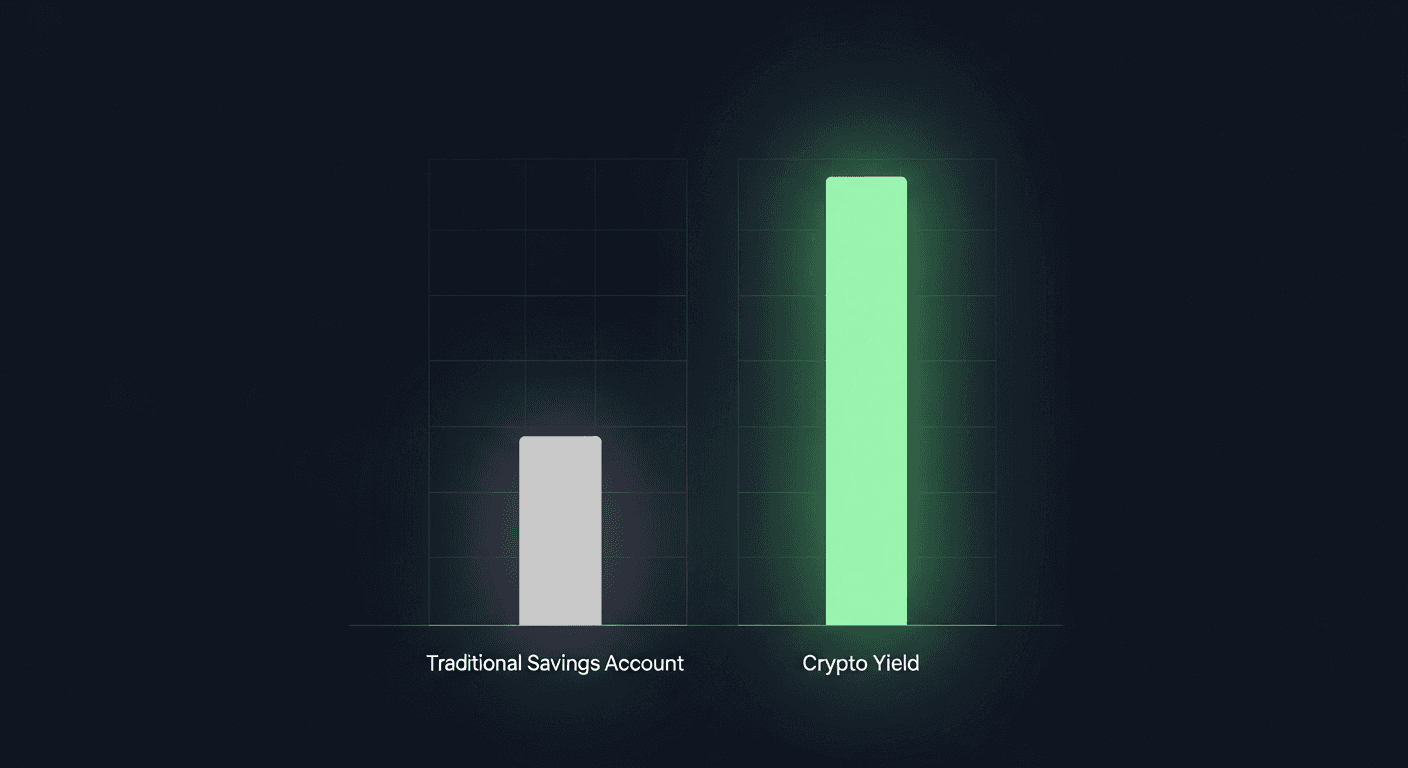
How to earn money online in 2026 (crypto yield vs. the rest)
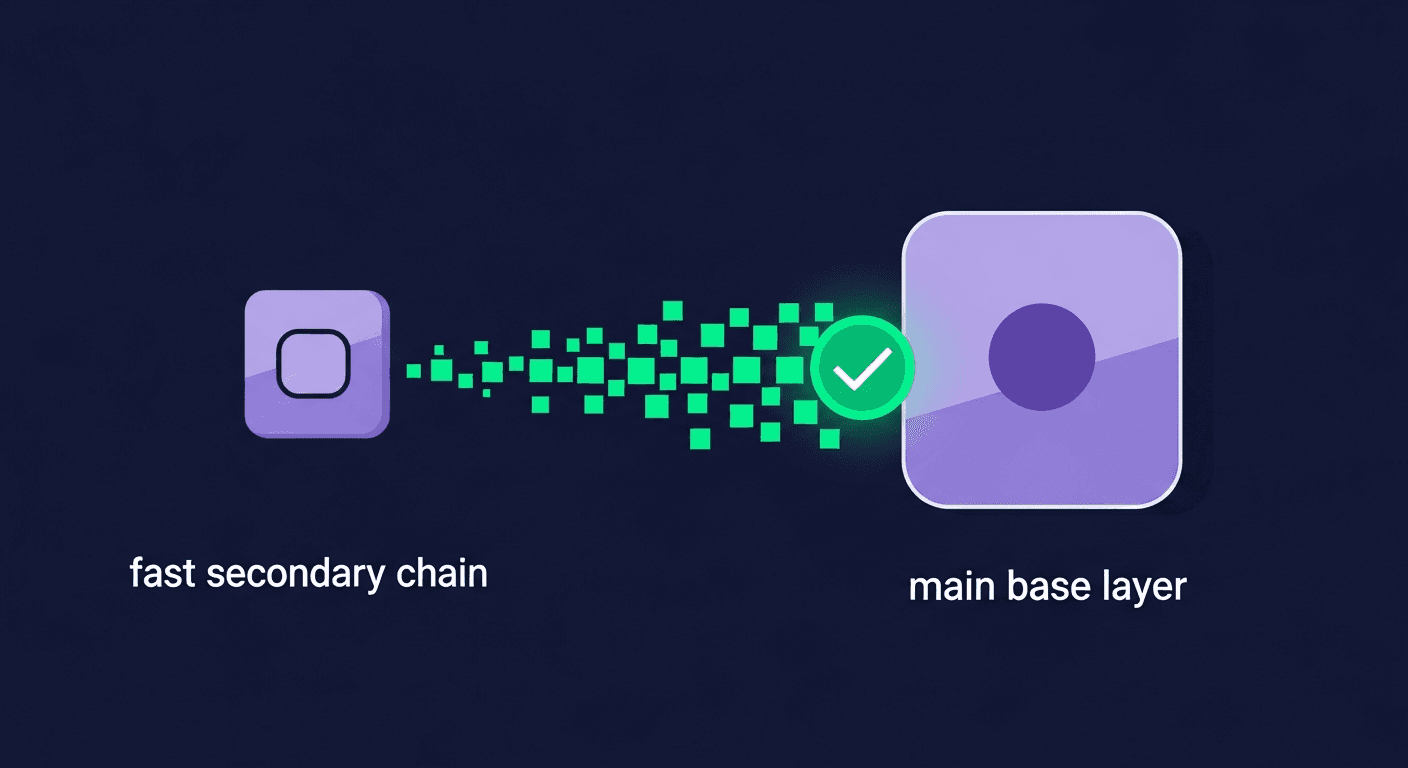
Linea crypto explained: what it is and how it works (2026)

Ethereum wallet guide 2026 (ethernet wallet explained)

DeFi Staking with Stader Labs: How ETHx Works in 2026

High-liquidity crypto exchanges: PancakeSwap guide 2026

What is Raydium? How Solana's AMM Works in 2026

Passive Income Ideas for 2026: 10 Ways That Actually Work

Hong Kong crypto news 2026: licenses, stablecoins, and regulation
©2026 Derechos de autor, PistachioFi Inc.
©2026 Derechos de autor, PistachioFi Inc.
©2026 Derechos de autor, PistachioFi Inc.