Self-custody crypto wallet guide: earn yield without giving up your keys
Self-custody crypto wallet guide: earn yield without giving up your keys

Self-custody crypto wallet guide: earn yield without giving up your keys
Self-custody crypto wallet guide: earn yield without giving up your keys
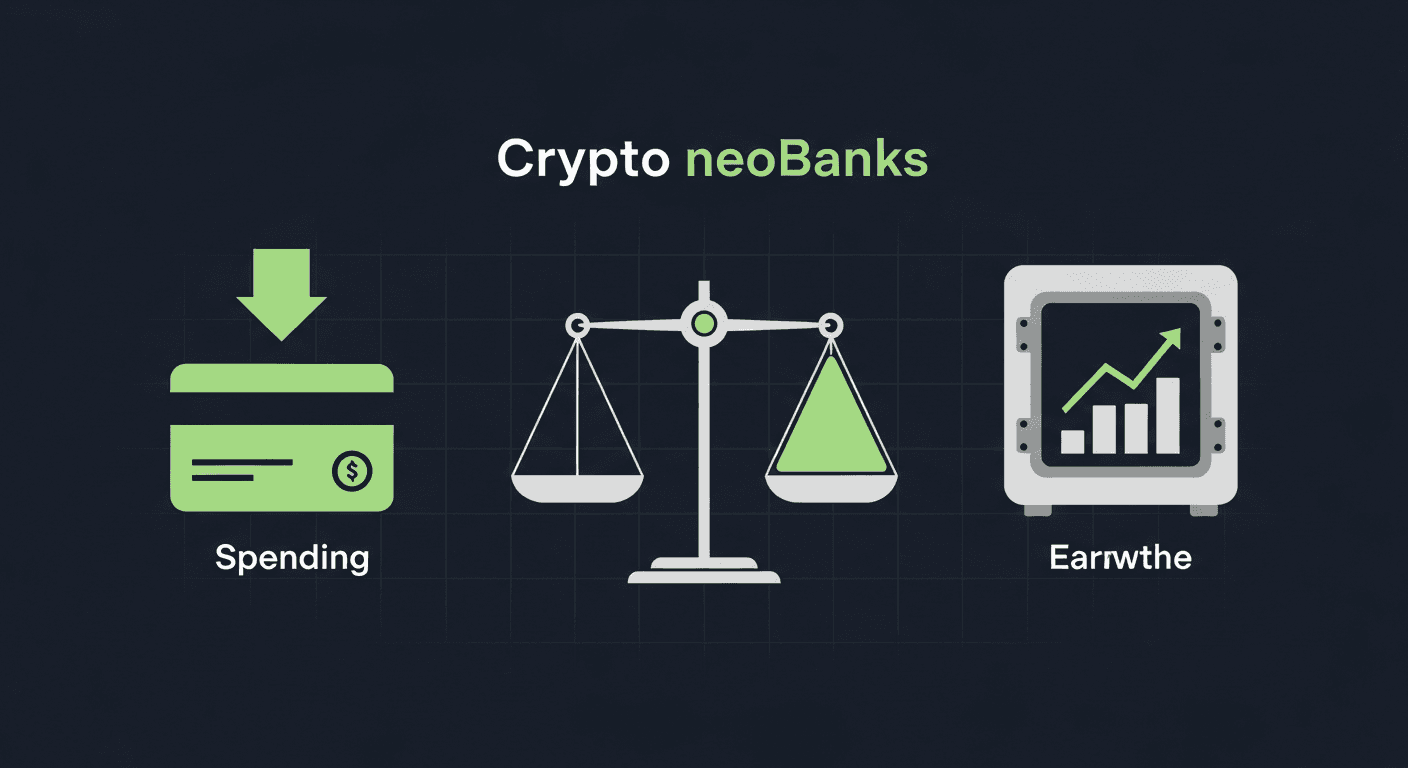
Your crypto sitting on an exchange is not really yours. That is the uncomfortable truth most people ignore until an exchange gets hacked, goes bankrupt, or freezes withdrawals. A self-custody crypto wallet puts you back in control by keeping your private keys where they belong: with you.
But here is the part that most guides skip over. Self-custody used to mean choosing between security and earning. You could lock your coins in cold storage and watch them sit idle, or you could hand them to a platform and hope nothing went wrong. That tradeoff is gone. Platforms like Pistachio.fi now let you access curated DeFi yield strategies while maintaining custody of your assets, so you can put your crypto to work without putting it at risk.
This guide covers why self-custody matters, which wallet types fit different needs, and how to earn yield without giving up control.
Key takeaways
A self-custody crypto wallet means you hold your own private keys, giving you full ownership of your assets with no reliance on a third party.
Exchange hacks cost the crypto industry $2.7 billion in 2025 alone. Self-custody removes that counterparty risk entirely.
You can earn 2-8% APY (or more depending on strategy) through DeFi staking and yield vaults without surrendering custody.
Pistachio.fi offers gasless access to curated investment vaults with expert risk grades, all while you keep control of your keys.
Common mistakes like losing seed phrases or signing blind transactions cause more losses than actual hacking does.
Why does self-custody matter more than ever?
The short answer: other people keep losing your money.
In 2025, hackers stole $2.7 billion in crypto, a record year for theft. The Bybit breach alone accounted for roughly $1.5 billion in stolen Ethereum. And these numbers only count hacks. They do not include exchanges that simply collapse under their own mismanagement.
FTX is the obvious example. When it filed for bankruptcy in November 2022, $8.9 billion in customer assets were missing. Over a million users woke up one morning unable to withdraw their own funds. The money was not technically stolen by an outside hacker. It was misappropriated by the people running the exchange.
Then there is the regulatory side. Governments can and do freeze exchange-held assets. The UK introduced crypto wallet freezing orders that let authorities lock funds held by UK-connected crypto service providers on suspicion of criminal activity. The US DOJ seized over $225 million in cryptocurrency across multiple enforcement actions in recent years. If your funds sit on a centralized platform, a court order can lock you out, even if you personally did nothing wrong.
Self-custody eliminates these risks. When you hold your own keys, no exchange can mismanage your funds, no hacker can breach a centralized honey pot to steal them, and no authority can freeze them through a third-party intermediary.
The numbers reflect this shift. By Q3 2025, 59% of crypto wallet users globally preferred non-custodial wallets, up from roughly 40% just two years earlier. Self-custody wallets now account for over 35% of total market supply. People are learning.
Self-custody vs exchange custody: what is the real difference?
The core distinction comes down to who controls the private keys.
Factor | Self-custody wallet | Exchange custody |
|---|---|---|
Private key control | You hold the keys | Exchange holds the keys |
Hack exposure | Limited to your device | Entire exchange is a target |
Regulatory freeze risk | Direct seizure nearly impossible | Court order can lock your account |
Account recovery | Seed phrase (your responsibility) | Customer support (their timeline) |
Earning yield | DeFi protocols, vaults, staking | Exchange staking products, lending |
Transaction fees | Gas fees (varies by network) | Platform fees, withdrawal fees |
KYC requirements | None for most wallets | Required by most regulated exchanges |
Uptime | 24/7, no maintenance windows | Subject to exchange outages |
Neither option is perfect. Exchange custody is simpler. You do not need to worry about seed phrases or gas fees. For someone buying their first $100 of Bitcoin, an exchange is fine.
But as your portfolio grows, the risk equation changes. The more you hold on an exchange, the more you stand to lose if something goes wrong. And "something going wrong" is not a hypothetical. It happens every year.
What types of self-custody wallets exist?
There are three main categories, each with different tradeoffs.
Hardware wallets store your private keys on a physical device that stays offline. Ledger and Trezor are the two dominant brands. Ledger devices use EAL6+ certified secure element chips (the same kind found in passports and credit cards) and support over 15,000 crypto assets through Ledger Live. Trezor takes an open-source approach, with fully auditable firmware, and their newer Safe 3 and Safe 5 models now include EAL6+ secure elements too. Prices range from $59 (Trezor One) to $399 (Ledger Stax). For most people holding more than a few thousand dollars in crypto, a hardware wallet is worth the investment.
Software wallets are apps on your phone or browser. MetaMask is the most popular for Ethereum and EVM-compatible chains. Trust Wallet covers multiple blockchains on mobile. These are free and convenient but carry more risk since your keys live on an internet-connected device. They work well for active DeFi participation and smaller amounts.
Smart account wallets are a newer category. These use smart contracts to add features like social recovery, spending limits, and gasless transactions on top of self-custody. Pistachio.fi uses smart accounts to give you the security benefits of self-custody with a smoother experience. You do not need to manage gas tokens or worry about losing access if you misplace a single seed phrase.
Multisig wallets require multiple signatures to authorize a transaction. Think of it like a safety deposit box that needs two keys from different people. These are popular with teams and high-net-worth holders who want an extra layer of protection.
How do you earn yield with a self-custody crypto wallet?
This is where the old "security vs returns" tradeoff has been completely rewritten.
DeFi staking lets you lock tokens to help secure a blockchain network and earn rewards in return. Ethereum staking through protocols like Lido pays around 3% APY. You keep custody of your assets through liquid staking tokens (like stETH) that represent your staked position and can be used across DeFi while earning rewards.
Yield vaults pool funds into automated strategies that move between DeFi protocols to optimize returns. These can range from conservative stablecoin strategies earning 3-6% to more aggressive options pushing higher. The catch with most vaults is that interacting with them requires paying gas fees and understanding which protocols are trustworthy.
Pistachio.fi addresses both problems. The platform offers curated investment vaults where each strategy gets an expert risk grade, so you know exactly what level of risk you are taking on. All transactions are completely gasless, which means no scrambling to hold ETH just to move your stablecoins. And you access everything through a self-custodial smart account, so your assets stay under your control.
Liquidity provision means depositing token pairs into decentralized exchanges and earning a share of trading fees. Returns can be attractive but come with impermanent loss risk, where the value of your deposited tokens diverges. This strategy suits experienced users who understand the mechanics.
For most people looking for self-custody crypto yield, starting with staking or a curated vault platform is the right move. You get predictable returns without needing to become a DeFi strategist overnight.
Setting up your first self-custody wallet: a practical walkthrough
Here is how to get started without overcomplicating things.
Step 1: Choose your wallet type. If you are holding over $1,000, get a hardware wallet. If you want to actively use DeFi, pair it with a software wallet like MetaMask. If you want yield with minimal friction, set up a smart account through Pistachio.fi.
Step 2: Write down your seed phrase. This is a set of 12 or 24 words generated when you create your wallet. Write it on paper. Do not store it digitally, not in a notes app, not in a screenshot, not in cloud storage. Consider stamping it into a metal plate for fire and water resistance.
Step 3: Store your seed phrase in at least two physical locations. A home safe and a bank deposit box work well. Some people split the phrase across locations so that no single location contains the full set.
Step 4: Send a small test transaction. Before moving your full balance, send a tiny amount to your new wallet and confirm it arrives. Then send a small amount back. This verifies you can both receive and send.
Step 5: Move your assets off the exchange. Once the test works, transfer your holdings. Keep a small amount on the exchange if you actively trade, but your long-term holdings should live in self-custody.
Step 6: Connect to yield opportunities. Link your wallet to a yield platform. Pistachio.fi's security architecture is built around protecting your assets while giving you access to vetted DeFi strategies.
Common self-custody mistakes that actually cost people money
Most crypto losses from self-custody are not caused by sophisticated attacks. They are caused by user error.
Storing seed phrases digitally. If your seed phrase exists in a photo, a Google Doc, or an email draft, it is a matter of when, not if, it gets compromised. Malware specifically targets these.
Signing transactions without reading them. Blind signing is how most phishing attacks succeed. A malicious dApp asks you to approve a transaction, you click confirm without checking the details, and your wallet gets drained. Always read what you are approving. If a transaction requests unlimited token approvals, that is a red flag.
Using a single backup location. Your house can flood. It can burn. If your only seed phrase backup is in a drawer, you are one disaster away from losing everything.
Ignoring wallet software updates. Wallet firmware updates frequently patch security vulnerabilities. Running outdated software is an unnecessary risk.
Falling for fake wallet apps. There have been counterfeit versions of MetaMask, Trust Wallet, and others on app stores. Always download from official sources and verify the developer name.
For a deeper look at protecting yourself, the Pistachio guide to not getting hacked covers the most common attack vectors and how to defend against them.
What happens if you lose access to your self-custody wallet?
This is the question that keeps people on exchanges. And it is a fair concern.
If you lose your seed phrase and your device breaks, your funds are gone. There is no customer support to call. With traditional self-custody, this is an accepted risk.
Smart account wallets change this equation. Social recovery mechanisms let you designate trusted contacts or devices that can help restore access without ever exposing your private keys. Pistachio.fi has a recovery system built into its smart accounts specifically to solve this problem.
For hardware wallet users, the seed phrase is your recovery mechanism. Protect it like you would protect the deed to your house.
One practical tip: test your recovery process before you need it. Reset a wallet and restore from your seed phrase with a small balance to make sure everything works. The worst time to discover a problem with your backup is when you actually need it.
Tax and tracking with self-custody
One argument people make for exchange custody is easier tax reporting, since the exchange generates your transaction history. But this gap has closed.
Pistachio.fi integrates with Awaken.Tax, which means your DeFi yield and transaction history get tracked automatically for tax purposes. You do not have to manually reconcile hundreds of on-chain transactions across protocols.
For hardware wallet users, tools like Koinly and CoinLedger can import on-chain data and generate tax reports. Self-custody no longer means a tax headache.
Frequently asked questions
Is a self-custody crypto wallet safe for beginners?
Yes, as long as you follow basic security practices. Write down your seed phrase, store it safely, and do not sign transactions you do not understand. Smart account wallets like those on Pistachio.fi simplify the experience further with gasless transactions and built-in recovery options.
Can I earn yield with a self-custody wallet?
Absolutely. DeFi protocols let you stake, provide liquidity, and access yield vaults while keeping custody of your assets. Pistachio.fi offers curated vaults with risk grades so you can earn self-custody crypto yield without needing to evaluate every protocol yourself.
What is the difference between a non-custodial wallet and a hardware wallet?
A non-custodial wallet is any wallet where you control the private keys. A hardware wallet is a specific type of non-custodial wallet that stores keys on a physical device. All hardware wallets are non-custodial, but not all non-custodial wallets are hardware wallets. Software wallets and smart account wallets are also non-custodial.
How much crypto should I keep on an exchange?
Only what you need for active trading. Long-term holdings, anything you would not sell in the next week, belong in self-custody. The exact threshold depends on your risk tolerance, but many experienced holders keep less than 10% of their portfolio on exchanges.
What if I lose my hardware wallet?
Your crypto is not on the device itself. It is on the blockchain. Your hardware wallet just holds the keys to access it. If you lose the device but still have your seed phrase, you can restore your wallet on a new device. If you lose both, your funds are unrecoverable. This is why seed phrase backups in multiple locations are non-negotiable.
Last updated: February 2026. Yield figures and statistics cited reflect data available at the time of writing. Always verify current rates before making investment decisions.
Your crypto sitting on an exchange is not really yours. That is the uncomfortable truth most people ignore until an exchange gets hacked, goes bankrupt, or freezes withdrawals. A self-custody crypto wallet puts you back in control by keeping your private keys where they belong: with you.
But here is the part that most guides skip over. Self-custody used to mean choosing between security and earning. You could lock your coins in cold storage and watch them sit idle, or you could hand them to a platform and hope nothing went wrong. That tradeoff is gone. Platforms like Pistachio.fi now let you access curated DeFi yield strategies while maintaining custody of your assets, so you can put your crypto to work without putting it at risk.
This guide covers why self-custody matters, which wallet types fit different needs, and how to earn yield without giving up control.
Key takeaways
A self-custody crypto wallet means you hold your own private keys, giving you full ownership of your assets with no reliance on a third party.
Exchange hacks cost the crypto industry $2.7 billion in 2025 alone. Self-custody removes that counterparty risk entirely.
You can earn 2-8% APY (or more depending on strategy) through DeFi staking and yield vaults without surrendering custody.
Pistachio.fi offers gasless access to curated investment vaults with expert risk grades, all while you keep control of your keys.
Common mistakes like losing seed phrases or signing blind transactions cause more losses than actual hacking does.
Why does self-custody matter more than ever?
The short answer: other people keep losing your money.
In 2025, hackers stole $2.7 billion in crypto, a record year for theft. The Bybit breach alone accounted for roughly $1.5 billion in stolen Ethereum. And these numbers only count hacks. They do not include exchanges that simply collapse under their own mismanagement.
FTX is the obvious example. When it filed for bankruptcy in November 2022, $8.9 billion in customer assets were missing. Over a million users woke up one morning unable to withdraw their own funds. The money was not technically stolen by an outside hacker. It was misappropriated by the people running the exchange.
Then there is the regulatory side. Governments can and do freeze exchange-held assets. The UK introduced crypto wallet freezing orders that let authorities lock funds held by UK-connected crypto service providers on suspicion of criminal activity. The US DOJ seized over $225 million in cryptocurrency across multiple enforcement actions in recent years. If your funds sit on a centralized platform, a court order can lock you out, even if you personally did nothing wrong.
Self-custody eliminates these risks. When you hold your own keys, no exchange can mismanage your funds, no hacker can breach a centralized honey pot to steal them, and no authority can freeze them through a third-party intermediary.
The numbers reflect this shift. By Q3 2025, 59% of crypto wallet users globally preferred non-custodial wallets, up from roughly 40% just two years earlier. Self-custody wallets now account for over 35% of total market supply. People are learning.
Self-custody vs exchange custody: what is the real difference?
The core distinction comes down to who controls the private keys.
Factor | Self-custody wallet | Exchange custody |
|---|---|---|
Private key control | You hold the keys | Exchange holds the keys |
Hack exposure | Limited to your device | Entire exchange is a target |
Regulatory freeze risk | Direct seizure nearly impossible | Court order can lock your account |
Account recovery | Seed phrase (your responsibility) | Customer support (their timeline) |
Earning yield | DeFi protocols, vaults, staking | Exchange staking products, lending |
Transaction fees | Gas fees (varies by network) | Platform fees, withdrawal fees |
KYC requirements | None for most wallets | Required by most regulated exchanges |
Uptime | 24/7, no maintenance windows | Subject to exchange outages |
Neither option is perfect. Exchange custody is simpler. You do not need to worry about seed phrases or gas fees. For someone buying their first $100 of Bitcoin, an exchange is fine.
But as your portfolio grows, the risk equation changes. The more you hold on an exchange, the more you stand to lose if something goes wrong. And "something going wrong" is not a hypothetical. It happens every year.
What types of self-custody wallets exist?
There are three main categories, each with different tradeoffs.
Hardware wallets store your private keys on a physical device that stays offline. Ledger and Trezor are the two dominant brands. Ledger devices use EAL6+ certified secure element chips (the same kind found in passports and credit cards) and support over 15,000 crypto assets through Ledger Live. Trezor takes an open-source approach, with fully auditable firmware, and their newer Safe 3 and Safe 5 models now include EAL6+ secure elements too. Prices range from $59 (Trezor One) to $399 (Ledger Stax). For most people holding more than a few thousand dollars in crypto, a hardware wallet is worth the investment.
Software wallets are apps on your phone or browser. MetaMask is the most popular for Ethereum and EVM-compatible chains. Trust Wallet covers multiple blockchains on mobile. These are free and convenient but carry more risk since your keys live on an internet-connected device. They work well for active DeFi participation and smaller amounts.
Smart account wallets are a newer category. These use smart contracts to add features like social recovery, spending limits, and gasless transactions on top of self-custody. Pistachio.fi uses smart accounts to give you the security benefits of self-custody with a smoother experience. You do not need to manage gas tokens or worry about losing access if you misplace a single seed phrase.
Multisig wallets require multiple signatures to authorize a transaction. Think of it like a safety deposit box that needs two keys from different people. These are popular with teams and high-net-worth holders who want an extra layer of protection.
How do you earn yield with a self-custody crypto wallet?
This is where the old "security vs returns" tradeoff has been completely rewritten.
DeFi staking lets you lock tokens to help secure a blockchain network and earn rewards in return. Ethereum staking through protocols like Lido pays around 3% APY. You keep custody of your assets through liquid staking tokens (like stETH) that represent your staked position and can be used across DeFi while earning rewards.
Yield vaults pool funds into automated strategies that move between DeFi protocols to optimize returns. These can range from conservative stablecoin strategies earning 3-6% to more aggressive options pushing higher. The catch with most vaults is that interacting with them requires paying gas fees and understanding which protocols are trustworthy.
Pistachio.fi addresses both problems. The platform offers curated investment vaults where each strategy gets an expert risk grade, so you know exactly what level of risk you are taking on. All transactions are completely gasless, which means no scrambling to hold ETH just to move your stablecoins. And you access everything through a self-custodial smart account, so your assets stay under your control.
Liquidity provision means depositing token pairs into decentralized exchanges and earning a share of trading fees. Returns can be attractive but come with impermanent loss risk, where the value of your deposited tokens diverges. This strategy suits experienced users who understand the mechanics.
For most people looking for self-custody crypto yield, starting with staking or a curated vault platform is the right move. You get predictable returns without needing to become a DeFi strategist overnight.
Setting up your first self-custody wallet: a practical walkthrough
Here is how to get started without overcomplicating things.
Step 1: Choose your wallet type. If you are holding over $1,000, get a hardware wallet. If you want to actively use DeFi, pair it with a software wallet like MetaMask. If you want yield with minimal friction, set up a smart account through Pistachio.fi.
Step 2: Write down your seed phrase. This is a set of 12 or 24 words generated when you create your wallet. Write it on paper. Do not store it digitally, not in a notes app, not in a screenshot, not in cloud storage. Consider stamping it into a metal plate for fire and water resistance.
Step 3: Store your seed phrase in at least two physical locations. A home safe and a bank deposit box work well. Some people split the phrase across locations so that no single location contains the full set.
Step 4: Send a small test transaction. Before moving your full balance, send a tiny amount to your new wallet and confirm it arrives. Then send a small amount back. This verifies you can both receive and send.
Step 5: Move your assets off the exchange. Once the test works, transfer your holdings. Keep a small amount on the exchange if you actively trade, but your long-term holdings should live in self-custody.
Step 6: Connect to yield opportunities. Link your wallet to a yield platform. Pistachio.fi's security architecture is built around protecting your assets while giving you access to vetted DeFi strategies.
Common self-custody mistakes that actually cost people money
Most crypto losses from self-custody are not caused by sophisticated attacks. They are caused by user error.
Storing seed phrases digitally. If your seed phrase exists in a photo, a Google Doc, or an email draft, it is a matter of when, not if, it gets compromised. Malware specifically targets these.
Signing transactions without reading them. Blind signing is how most phishing attacks succeed. A malicious dApp asks you to approve a transaction, you click confirm without checking the details, and your wallet gets drained. Always read what you are approving. If a transaction requests unlimited token approvals, that is a red flag.
Using a single backup location. Your house can flood. It can burn. If your only seed phrase backup is in a drawer, you are one disaster away from losing everything.
Ignoring wallet software updates. Wallet firmware updates frequently patch security vulnerabilities. Running outdated software is an unnecessary risk.
Falling for fake wallet apps. There have been counterfeit versions of MetaMask, Trust Wallet, and others on app stores. Always download from official sources and verify the developer name.
For a deeper look at protecting yourself, the Pistachio guide to not getting hacked covers the most common attack vectors and how to defend against them.
What happens if you lose access to your self-custody wallet?
This is the question that keeps people on exchanges. And it is a fair concern.
If you lose your seed phrase and your device breaks, your funds are gone. There is no customer support to call. With traditional self-custody, this is an accepted risk.
Smart account wallets change this equation. Social recovery mechanisms let you designate trusted contacts or devices that can help restore access without ever exposing your private keys. Pistachio.fi has a recovery system built into its smart accounts specifically to solve this problem.
For hardware wallet users, the seed phrase is your recovery mechanism. Protect it like you would protect the deed to your house.
One practical tip: test your recovery process before you need it. Reset a wallet and restore from your seed phrase with a small balance to make sure everything works. The worst time to discover a problem with your backup is when you actually need it.
Tax and tracking with self-custody
One argument people make for exchange custody is easier tax reporting, since the exchange generates your transaction history. But this gap has closed.
Pistachio.fi integrates with Awaken.Tax, which means your DeFi yield and transaction history get tracked automatically for tax purposes. You do not have to manually reconcile hundreds of on-chain transactions across protocols.
For hardware wallet users, tools like Koinly and CoinLedger can import on-chain data and generate tax reports. Self-custody no longer means a tax headache.
Frequently asked questions
Is a self-custody crypto wallet safe for beginners?
Yes, as long as you follow basic security practices. Write down your seed phrase, store it safely, and do not sign transactions you do not understand. Smart account wallets like those on Pistachio.fi simplify the experience further with gasless transactions and built-in recovery options.
Can I earn yield with a self-custody wallet?
Absolutely. DeFi protocols let you stake, provide liquidity, and access yield vaults while keeping custody of your assets. Pistachio.fi offers curated vaults with risk grades so you can earn self-custody crypto yield without needing to evaluate every protocol yourself.
What is the difference between a non-custodial wallet and a hardware wallet?
A non-custodial wallet is any wallet where you control the private keys. A hardware wallet is a specific type of non-custodial wallet that stores keys on a physical device. All hardware wallets are non-custodial, but not all non-custodial wallets are hardware wallets. Software wallets and smart account wallets are also non-custodial.
How much crypto should I keep on an exchange?
Only what you need for active trading. Long-term holdings, anything you would not sell in the next week, belong in self-custody. The exact threshold depends on your risk tolerance, but many experienced holders keep less than 10% of their portfolio on exchanges.
What if I lose my hardware wallet?
Your crypto is not on the device itself. It is on the blockchain. Your hardware wallet just holds the keys to access it. If you lose the device but still have your seed phrase, you can restore your wallet on a new device. If you lose both, your funds are unrecoverable. This is why seed phrase backups in multiple locations are non-negotiable.
Last updated: February 2026. Yield figures and statistics cited reflect data available at the time of writing. Always verify current rates before making investment decisions.

Cross-chain crypto swaps: how Li.Fi powers Pistachio's one-tap zaps (2026)

Etherfuse stablebonds: earn government bond yields on-chain (2026)
How to earn money online in 2026 (crypto yield vs. the rest)
Linea crypto explained: what it is and how it works (2026)

Ethereum wallet guide 2026 (ethernet wallet explained)
DeFi Staking with Stader Labs: How ETHx Works in 2026

High-liquidity crypto exchanges: PancakeSwap guide 2026

What is Raydium? How Solana's AMM Works in 2026

Passive Income Ideas for 2026: 10 Ways That Actually Work

Hong Kong crypto news 2026: licenses, stablecoins, and regulation
©2026 Copyright, PistachioFi Inc.
©2026 Copyright, PistachioFi Inc.
©2026 Copyright, PistachioFi Inc.