EigenLayer Restaking Guide 2026: Earn Extra ETH Yield
EigenLayer Restaking Guide 2026: Earn Extra ETH Yield

EigenLayer Restaking Guide 2026: Earn Extra ETH Yield
EigenLayer Restaking Guide 2026: Earn Extra ETH Yield
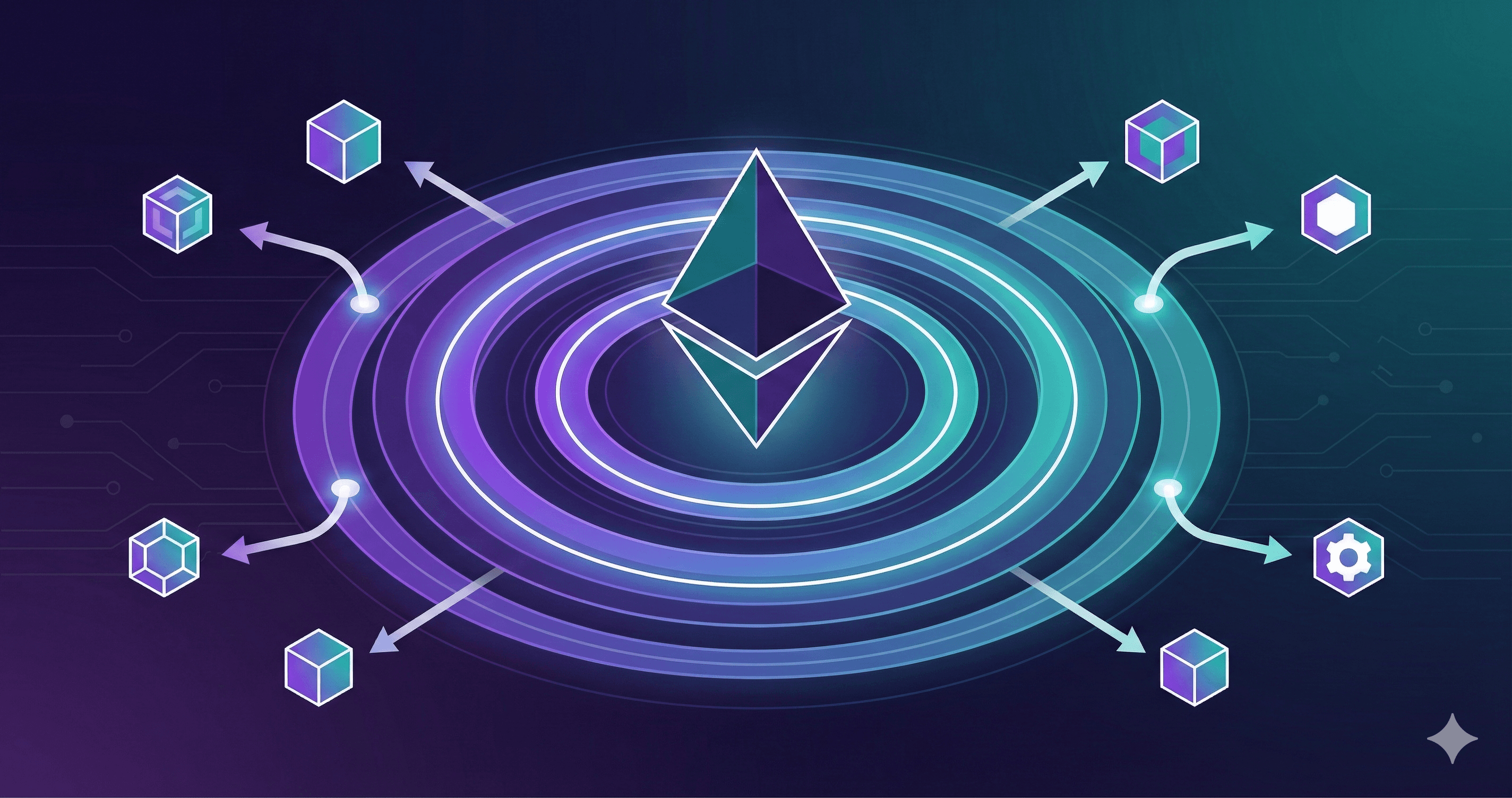
EigenLayer lets you take ETH that's already staked and put it to work again, earning rewards from multiple protocols at once. With over $15 billion locked in the protocol as of February 2026, restaking has moved from experimental to mainstream.
This guide covers how EigenLayer works, what returns you can realistically expect, and the risks you need to understand before committing your ETH. If you've been earning 3-4% on staked ETH and wondering whether restaking is worth the added complexity, you're in the right place.
Key takeaways
EigenLayer controls 93.9% of the restaking market with over $15 billion TVL and 4.3 million ETH restaked
Current APY ranges from 3.8% to 6% depending on which Actively Validated Services (AVS) you choose
Slashing risk is real because you can lose funds if the operator you delegate to misbehaves on any AVS network
Liquid restaking tokens (LRTs) offer easier access through protocols like Ether.fi that handle the complexity for you
What is EigenLayer and why does restaking matter?
Traditional ETH staking secures one network: Ethereum. You lock up 32 ETH (or stake through a pool), validate transactions, and earn roughly 3-4% annually.
EigenLayer introduces a twist. Your staked ETH can simultaneously secure other protocols called Actively Validated Services (AVS). These are infrastructure projects that need economic security but don't want to bootstrap their own validator networks from scratch.
Think of it like this: you're already a security guard at one building. EigenLayer lets you moonlight at other buildings during the same shift, earning multiple paychecks. The catch? If you mess up at any job, you could lose your main position too.
If you're new to the concept of earning yield on staked assets, our guide to liquid staking covers the fundamentals before you dive into restaking.
How EigenLayer restaking works
The mechanics work in three layers:
1. You delegate your staked ETH
You don't send ETH directly to EigenLayer. Instead, you delegate your already-staked ETH (through Lido's stETH, Rocket Pool's rETH, or native staking) to an EigenLayer operator.
2. Operators run validation for AVS protocols
Operators are professional node runners who validate transactions across multiple AVS networks. They use your delegated stake as collateral backing their work.
3. AVS protocols pay rewards
Each AVS pays operators (and by extension, you) for the security you provide. More AVS = more reward streams, but also more risk exposure.
What can you actually earn?
Current yields depend heavily on which AVS protocols you're securing:
Yield source | Typical APY | Risk level |
|---|---|---|
Base ETH staking only | 3-4% | Low |
ETH staking + EigenLayer restaking | 4.8-6% | Medium |
Aggressive strategies (multiple AVS + points farming) | 7-10%+ | High |
The estimated reward rate on Coinbase for EIGEN staking sits around 4.85%. But this varies. Some operators offer higher rates by opting into more AVS networks, which means more potential rewards but also more slashing exposure.
For comparison with other yield options, check our Ethereum staking yield breakdown to see how restaking stacks up against vanilla staking.
Which AVS protocols exist today?
EigenLayer has grown from a concept to a full ecosystem. The most notable AVS include:
EigenDA: The flagship data availability layer. Most TVL currently secures EigenDA, which helps rollups store transaction data more cheaply than posting directly to Ethereum.
EigenAI and EigenCompute: Went live on mainnet in late 2025. EigenAI provides verifiable AI inference, while EigenCompute handles off-chain execution verification.
AltLayer, Brevis, Lagrange, WitnessChain: These handle everything from rollup infrastructure to DePIN coordination to cross-chain messaging.
The trend in 2026 is toward "Vertical AVS" (VAVS) that specialize in specific validation types. AI verification is particularly hot, with restaking becoming infrastructure for decentralized AI applications.
What are the actual risks?
Restaking isn't free money. Here's what can go wrong:
Slashing risk is compounded
Regular staking: you can get slashed if your validator misbehaves on Ethereum. Restaking: you can get slashed on Ethereum AND on any AVS your operator validates. One bad move on any network can cost you a portion of your stake.
The slashing conditions vary by AVS. Some are lenient; others can take 100% of funds for serious violations.
Operator selection matters enormously
You're trusting operators to run infrastructure correctly across multiple protocols. A poorly run operation could get slashed through negligence, not malice. Research operators carefully before delegating.
Smart contract risk multiplies
Your funds interact with EigenLayer contracts, AVS contracts, and potentially liquid restaking protocol contracts. Each layer adds potential failure points. A bug anywhere in the stack could result in losses.
Withdrawal timing
Unstaking isn't instant. Depending on the route you took in, exits can take days or weeks. During market stress, you might not be able to exit when you want to.
Understanding these risks is essential. Our security guide covers general best practices for protecting your crypto positions.
How to get started with restaking
You have two main paths:
Option 1: Direct restaking through EigenLayer
Stake ETH through a liquid staking protocol (Lido, Rocket Pool) or native staking
Visit app.eigenlayer.xyz
Deposit your LST (stETH, rETH, etc.) or native staked ETH
Choose an operator to delegate to
Select which AVS to opt into
This gives you maximum control but requires active management and research into operators.
Option 2: Liquid restaking tokens (LRTs)
Protocols like Ether.fi, Renzo, Kelp DAO, and Puffer handle the complexity for you:
Deposit ETH into the LRT protocol
Receive a liquid token (e.g., eETH from Ether.fi)
The protocol handles operator selection and AVS management
Your LRT accrues restaking rewards automatically
LRTs are simpler but add another protocol layer (and fee). Ether.fi is currently the largest with over $2.8 billion TVL.
We cover LRTs in depth in our liquid restaking tokens guide if you want to explore that route.
Should you restake your ETH?
Restaking makes sense if:
You already hold staked ETH and want incremental yield
You understand the additional slashing and smart contract risks
You can afford to have funds locked for extended periods
You're willing to research operators or trust an LRT protocol's selection
It probably doesn't make sense if:
You need liquidity access
You're not comfortable with added technical complexity
The extra 1-3% APY isn't worth the additional risk to you
For many people, the simpler approach of earning yield on stablecoins might be more appropriate, especially if capital preservation matters more than maximizing returns.
Common questions about EigenLayer restaking
Can I lose all my staked ETH through restaking?
Theoretically, yes. Slashing penalties can range from small percentages to 100% depending on the violation and AVS rules. In practice, major slashing events have been rare, but the risk exists.
What's the minimum amount needed to restake?
There's no strict minimum for delegating through EigenLayer or LRT protocols. However, gas costs on Ethereum can make small positions uneconomical. Consider whether potential rewards justify transaction fees.
How do EIGEN token rewards work?
EigenLayer is revamping its rewards to link payouts more directly to active participation. The foundation has announced plans to channel AVS revenue back to EIGEN holders based on their contribution to network security.
Is restaking available outside Ethereum?
EigenLayer is Ethereum-focused, but the restaking concept is spreading. Protocols like Ethos are working to extend restaking to Cosmos chains and other ecosystems.
Can I access restaking through Pistachio?
Pistachio is a smart account that gives you direct access to DeFi protocols, including liquid restaking. You can also earn stablecoin yield through Morpho lending vaults curated by Gauntlet. All transactions are gasless, and your portfolio exports to Awaken.Tax for easy tax filing.
Related reading
Start earning yield with Pistachio
Access DeFi protocols and earn stablecoin yield through Morpho vaults, all from one gasless smart account with built-in tax tracking.
EigenLayer lets you take ETH that's already staked and put it to work again, earning rewards from multiple protocols at once. With over $15 billion locked in the protocol as of February 2026, restaking has moved from experimental to mainstream.
This guide covers how EigenLayer works, what returns you can realistically expect, and the risks you need to understand before committing your ETH. If you've been earning 3-4% on staked ETH and wondering whether restaking is worth the added complexity, you're in the right place.
Key takeaways
EigenLayer controls 93.9% of the restaking market with over $15 billion TVL and 4.3 million ETH restaked
Current APY ranges from 3.8% to 6% depending on which Actively Validated Services (AVS) you choose
Slashing risk is real because you can lose funds if the operator you delegate to misbehaves on any AVS network
Liquid restaking tokens (LRTs) offer easier access through protocols like Ether.fi that handle the complexity for you
What is EigenLayer and why does restaking matter?
Traditional ETH staking secures one network: Ethereum. You lock up 32 ETH (or stake through a pool), validate transactions, and earn roughly 3-4% annually.
EigenLayer introduces a twist. Your staked ETH can simultaneously secure other protocols called Actively Validated Services (AVS). These are infrastructure projects that need economic security but don't want to bootstrap their own validator networks from scratch.
Think of it like this: you're already a security guard at one building. EigenLayer lets you moonlight at other buildings during the same shift, earning multiple paychecks. The catch? If you mess up at any job, you could lose your main position too.
If you're new to the concept of earning yield on staked assets, our guide to liquid staking covers the fundamentals before you dive into restaking.
How EigenLayer restaking works
The mechanics work in three layers:
1. You delegate your staked ETH
You don't send ETH directly to EigenLayer. Instead, you delegate your already-staked ETH (through Lido's stETH, Rocket Pool's rETH, or native staking) to an EigenLayer operator.
2. Operators run validation for AVS protocols
Operators are professional node runners who validate transactions across multiple AVS networks. They use your delegated stake as collateral backing their work.
3. AVS protocols pay rewards
Each AVS pays operators (and by extension, you) for the security you provide. More AVS = more reward streams, but also more risk exposure.
What can you actually earn?
Current yields depend heavily on which AVS protocols you're securing:
Yield source | Typical APY | Risk level |
|---|---|---|
Base ETH staking only | 3-4% | Low |
ETH staking + EigenLayer restaking | 4.8-6% | Medium |
Aggressive strategies (multiple AVS + points farming) | 7-10%+ | High |
The estimated reward rate on Coinbase for EIGEN staking sits around 4.85%. But this varies. Some operators offer higher rates by opting into more AVS networks, which means more potential rewards but also more slashing exposure.
For comparison with other yield options, check our Ethereum staking yield breakdown to see how restaking stacks up against vanilla staking.
Which AVS protocols exist today?
EigenLayer has grown from a concept to a full ecosystem. The most notable AVS include:
EigenDA: The flagship data availability layer. Most TVL currently secures EigenDA, which helps rollups store transaction data more cheaply than posting directly to Ethereum.
EigenAI and EigenCompute: Went live on mainnet in late 2025. EigenAI provides verifiable AI inference, while EigenCompute handles off-chain execution verification.
AltLayer, Brevis, Lagrange, WitnessChain: These handle everything from rollup infrastructure to DePIN coordination to cross-chain messaging.
The trend in 2026 is toward "Vertical AVS" (VAVS) that specialize in specific validation types. AI verification is particularly hot, with restaking becoming infrastructure for decentralized AI applications.
What are the actual risks?
Restaking isn't free money. Here's what can go wrong:
Slashing risk is compounded
Regular staking: you can get slashed if your validator misbehaves on Ethereum. Restaking: you can get slashed on Ethereum AND on any AVS your operator validates. One bad move on any network can cost you a portion of your stake.
The slashing conditions vary by AVS. Some are lenient; others can take 100% of funds for serious violations.
Operator selection matters enormously
You're trusting operators to run infrastructure correctly across multiple protocols. A poorly run operation could get slashed through negligence, not malice. Research operators carefully before delegating.
Smart contract risk multiplies
Your funds interact with EigenLayer contracts, AVS contracts, and potentially liquid restaking protocol contracts. Each layer adds potential failure points. A bug anywhere in the stack could result in losses.
Withdrawal timing
Unstaking isn't instant. Depending on the route you took in, exits can take days or weeks. During market stress, you might not be able to exit when you want to.
Understanding these risks is essential. Our security guide covers general best practices for protecting your crypto positions.
How to get started with restaking
You have two main paths:
Option 1: Direct restaking through EigenLayer
Stake ETH through a liquid staking protocol (Lido, Rocket Pool) or native staking
Visit app.eigenlayer.xyz
Deposit your LST (stETH, rETH, etc.) or native staked ETH
Choose an operator to delegate to
Select which AVS to opt into
This gives you maximum control but requires active management and research into operators.
Option 2: Liquid restaking tokens (LRTs)
Protocols like Ether.fi, Renzo, Kelp DAO, and Puffer handle the complexity for you:
Deposit ETH into the LRT protocol
Receive a liquid token (e.g., eETH from Ether.fi)
The protocol handles operator selection and AVS management
Your LRT accrues restaking rewards automatically
LRTs are simpler but add another protocol layer (and fee). Ether.fi is currently the largest with over $2.8 billion TVL.
We cover LRTs in depth in our liquid restaking tokens guide if you want to explore that route.
Should you restake your ETH?
Restaking makes sense if:
You already hold staked ETH and want incremental yield
You understand the additional slashing and smart contract risks
You can afford to have funds locked for extended periods
You're willing to research operators or trust an LRT protocol's selection
It probably doesn't make sense if:
You need liquidity access
You're not comfortable with added technical complexity
The extra 1-3% APY isn't worth the additional risk to you
For many people, the simpler approach of earning yield on stablecoins might be more appropriate, especially if capital preservation matters more than maximizing returns.
Common questions about EigenLayer restaking
Can I lose all my staked ETH through restaking?
Theoretically, yes. Slashing penalties can range from small percentages to 100% depending on the violation and AVS rules. In practice, major slashing events have been rare, but the risk exists.
What's the minimum amount needed to restake?
There's no strict minimum for delegating through EigenLayer or LRT protocols. However, gas costs on Ethereum can make small positions uneconomical. Consider whether potential rewards justify transaction fees.
How do EIGEN token rewards work?
EigenLayer is revamping its rewards to link payouts more directly to active participation. The foundation has announced plans to channel AVS revenue back to EIGEN holders based on their contribution to network security.
Is restaking available outside Ethereum?
EigenLayer is Ethereum-focused, but the restaking concept is spreading. Protocols like Ethos are working to extend restaking to Cosmos chains and other ecosystems.
Can I access restaking through Pistachio?
Pistachio is a smart account that gives you direct access to DeFi protocols, including liquid restaking. You can also earn stablecoin yield through Morpho lending vaults curated by Gauntlet. All transactions are gasless, and your portfolio exports to Awaken.Tax for easy tax filing.
Related reading
Start earning yield with Pistachio
Access DeFi protocols and earn stablecoin yield through Morpho vaults, all from one gasless smart account with built-in tax tracking.

Cross-chain crypto swaps: how Li.Fi powers Pistachio's one-tap zaps (2026)

Etherfuse stablebonds: earn government bond yields on-chain (2026)
How to earn money online in 2026 (crypto yield vs. the rest)
Linea crypto explained: what it is and how it works (2026)

Ethereum wallet guide 2026 (ethernet wallet explained)
DeFi Staking with Stader Labs: How ETHx Works in 2026

High-liquidity crypto exchanges: PancakeSwap guide 2026

What is Raydium? How Solana's AMM Works in 2026

Passive Income Ideas for 2026: 10 Ways That Actually Work

Hong Kong crypto news 2026: licenses, stablecoins, and regulation
©2026 Copyright, PistachioFi Inc.
©2026 Copyright, PistachioFi Inc.
©2026 Copyright, PistachioFi Inc.